
Signs of Chimney Problems: What to Watch For


Water, heat, and time are hard on chimney materials. Small cracks and minor leaks rarely stay small for long. A chimney that looks fine from the living room can have serious damage inside the flue or at the top. Here is what to look for.
Cracks in Chimney Masonry
Cracks in the brick or mortar are one of the most common signs your chimney needs repair. Small cracks can form from freeze and thaw cycles, age, or settling. Left alone, water gets into those cracks. The next freeze makes them wider.
Horizontal cracks in mortar joints are especially worth noting. They tend to spread faster and weaken the chimney structure more than vertical cracks. Cracks in the firebox interior are also a concern since heat and combustion gases can reach surrounding materials through them.
If you see white staining on the exterior of your chimney, that is a sign called efflorescence. It means water is already moving through the masonry. The white residue is a mineral deposit left behind as water evaporates. It is not dangerous on its own, but it confirms water is getting in.
Chimney Water Damage
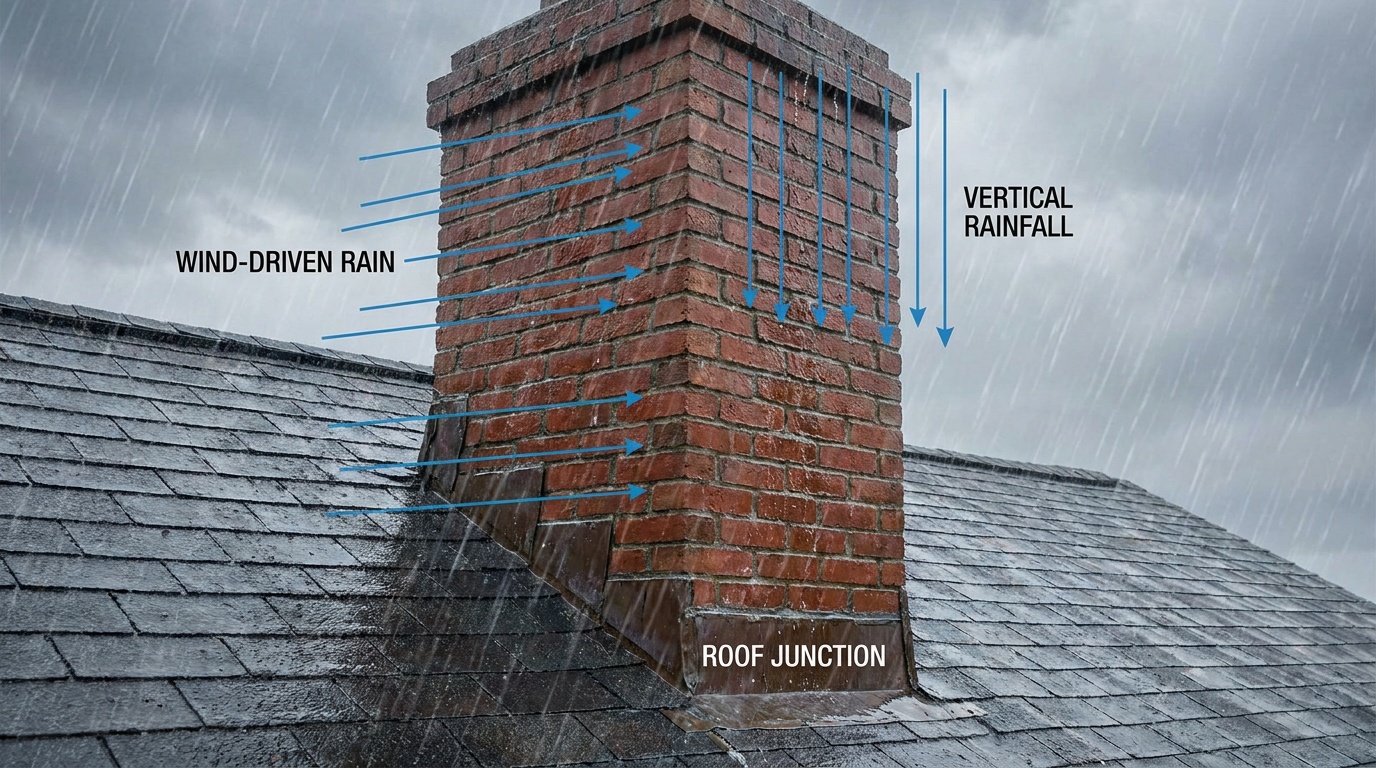
Without proper waterproofing, sealing, and a functioning cap and crown, water finds its way in. If you're wondering what repairing a damaged crown typically costs, you can compare chimney crown repair and rebuild costs before scheduling the work.

Signs of Chimney Leaks
Water stains on the ceiling or walls near your fireplace often trace back to a chimney leak. You may also notice staining inside the firebox itself, rust on the damper, or a musty smell when the fireplace is not in use.
A damaged chimney crown is a frequent source of leaks. The crown is the concrete or mortar cap that sits at the very top of the chimney, around the flue. Cracks in the crown let rain run straight into the chimney structure. If the crown is deteriorating, water damage will follow quickly — crown repair is priced by the crown's size, so catching it small matters.
Damaged Flashing
Flashing is the metal seal where your chimney meets your roof. When flashing pulls away, rusts, or cracks, water runs into the gap and into your attic or walls. You may not see it inside the chimney at all. Water stains near the roofline or on the ceiling below the chimney are the giveaway.
Smoke Backing into Your House
Smoke backing up into your home is a sign something is wrong. A chimney that draws properly pulls smoke up and out of the flue when you have a fire burning. When smoke comes into the room instead, the system is not working as it should.
Common causes include a closed or damaged damper, a blocked flue, or a draft problem. A blockage can be creosote buildup, a bird nest, debris, or even a dead animal. If heavy creosote is the cause, our chimney cleaning cost guide explains what homeowners typically pay. In some cases the chimney is simply too short to create enough draft given the home layout and surrounding roofline.
Do not keep using the fireplace if smoke is entering the room. Carbon monoxide comes with smoke and cannot be detected without a monitor. Have the chimney inspected before you burn again.
Chimney Fire Signs
Many chimney fires go unnoticed, which makes knowing the warning signs even more important.
- Loud cracking or popping sound while burning
- Strong smell of something burning beyond normal wood smoke
- Heavy smoke coming from the top of the flue
- Visible damage to the chimney cap or liner after a fire
- Creosote buildup that looks puffy, expanded, or glazed
Heavy creosote isn't just a fire clue — it's the fire's fuel. If it's been a few seasons since your last sweep, here's what a professional cleaning costs before that buildup reaches the glazed stage.
Spalling Brick
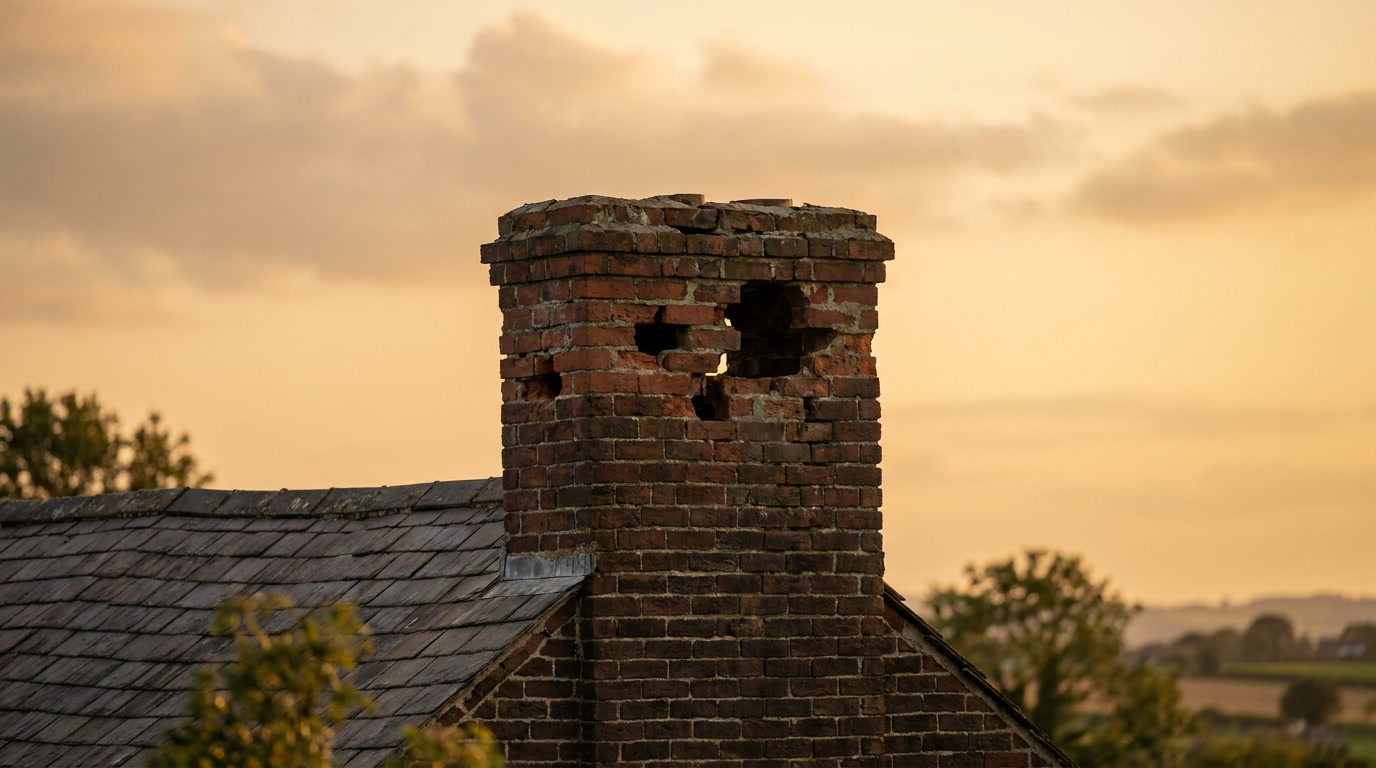
Spalling happens when the face of a brick breaks off or flakes away. You may notice pieces of brick or mortar on the ground around your chimney, on your roof, or inside your firebox. This is a sign the masonry has been weakened, often by water getting into the brick and freezing.
Spalling chimney damage gets worse each year it is left alone. More water enters through the exposed brick surface, more freeze and thaw cycles occur, and more material breaks away. Once spalling is visible, chimney repair should not be delayed.
A Damaged or Missing Chimney Cap
The chimney cap sits at the top of the flue opening. It keeps rain, animals, and debris out. A missing or broken cap is one of the fastest ways for chimney problems to start. Without it, every rainstorm sends water directly into the flue.
Check the top of your chimney periodically if you can see it safely from the ground or a window. A missing cap is easy to spot. A rusted or cracked cap may need a closer look from a professional.
Interior Warning Signs
Rust on the Damper or Firebox
Rust means moisture has been getting into the firebox. A rusty damper may not seal properly, which reduces draft and lets cold air and animals into the flue when you are not using the fireplace.
Wallpaper or Paint Peeling Near the Fireplace
Excess moisture from chimney leaks can show up on nearby walls. Peeling paint or bubbling wallpaper next to the fireplace or on the wall behind the chimney may trace back to a chimney water problem, not a plumbing one.
Odor from the Fireplace
A strong smell coming from the fireplace when it is not in use is worth noting. A musty smell suggests moisture inside the flue. A sharp or acrid smell can indicate creosote buildup. A smell of something rotting may mean an animal has gotten in and died. Strange sounds are their own diagnostic category — here's what different chimney noises usually mean.
When Your Chimney Needs Immediate Repair
Some signs mean you should stop using the fireplace right away and call a chimney professional. These include smoke backing into the house during use, visible cracks in the firebox, a strong odor of something burning when no fire is lit, or any sign of structural movement in the chimney itself.
A leaning chimney or one that appears to be separating from the house is a structural concern. Do not wait on this. Have it assessed as soon as possible.
An annual inspection is the best way to catch chimney problems before they become expensive repairs.
- Cracks in the brick or mortar joints
- White staining on the exterior masonry
- Water stains near the fireplace or on the ceiling
- Smoke entering the room when the fireplace is in use
- Odor coming from the fireplace when it is not in use
Act Before the Damage Adds Up
Chimney problems rarely fix themselves. A small crack becomes a bigger one. A minor leak leads to water damage inside your walls. A creosote buildup becomes a fire risk. The earlier you catch an issue, the simpler and less costly the repair tends to be.
If you have spotted any of the signs covered in this post, do not wait for the next heating season to get it checked. Your chimney should be working safely every time you use it. A Level 2 camera inspection puts a video record on every one of these symptoms — here's what it costs in 2026 — and our team will tell you plainly what needs attention now and what can wait.
Frequently Asked Questions
How would I know if I had a chimney fire?
You may hear loud cracking or a roaring sound during a fire. After the fact, signs include a warped damper, cracked liner, heavy creosote deposits that appear puffy or expanded, and damage to the chimney cap.
How do you know if your chimney is bad?
Visible cracks in the masonry, water stains near the fireplace, smoke entering the room, a damaged crown or cap, and spalling brick are all signs that your chimney needs attention.
What is the average cost to repair a chimney?
Chimney repair costs vary based on the type and extent of damage. Minor repairs like tuckpointing or cap replacement cost less than major work like liner replacement or rebuilding the crown.
What is the 3 to 10 rule for chimneys?
The 3 to 10 rule states that a chimney must extend at least 3 feet above the roof penetration point and be at least 2 feet higher than any part of the roof within 10 feet.
What is the life expectancy of a chimney?
A well-maintained masonry chimney can last 50 to 100 years. The internal components, like the liner, damper, and cap, typically need attention or replacement sooner, depending on use and maintenance.
What does an unsafe chimney look like?
An unsafe chimney may have large cracks in the masonry, a missing or broken cap, a damaged liner, visible deterioration at the crown, smoke staining on exterior brickwork, or structural leaning. If you notice any of these warning signs, schedule a professional chimney inspection as soon as possible.
What dissolves chimney creosote?
Chemical creosote removers can break down light deposits and make them easier to brush out during cleaning. Heavy glazed creosote buildup typically requires professional removal.
What is a common chimney problem?
Creosote buildup, cracked mortar joints, damaged chimney crowns, and chimney leaks are among the most common chimney problems.
What time of year is best for chimney repair?
Late summer and early fall are ideal. Mortar and sealants cure best in dry, moderate temperatures.




RELATED ARTICLS

Schedule an Inspection Now
with expert chimney care.