Chimney Waterproofing

Keep water out without sealing moisture in

4.9 · 3,412 Google reviews

CSIA & NFPA certified

1-year workmanship warranty

Same-day PDF report

40 years sweeping chimneys
3,412 verified Google reviews
4.9 average rating
CSIA-certified crew
NFPA 211 compliant
Licensed in 6 states
100% background-checked technicians
Free estimates
40 years sweeping chimneys
3,412 verified Google reviews
4.9 average rating
CSIA-certified crew
NFPA 211 compliant
Licensed in 6 states
100% background-checked technicians
Free estimates
40 years sweeping chimneys
3,412 verified Google reviews
4.9 average rating
CSIA-certified crew
NFPA 211 compliant
Licensed in 6 states
100% background-checked technicians
Free estimates
40 years sweeping chimneys
3,412 verified Google reviews
4.9 average rating
CSIA-certified crew
NFPA 211 compliant
Licensed in 6 states
100% background-checked technicians
Free estimates
Number section icon
Pricing, before you commit

Want an estimate before booking?

Waterproofing is quoted after the masonry is assessed, because sealing failed joints achieves nothing. Use our free Inspection Cost Calculator to see what that assessment costs, in under 30 seconds. No email, no callback, no surprise fees.

Open Cost Calculator

Open Cost Calculator

No email required · Instant estimate

Estimate preview

Live

waterproofing

Quoted after masonry assessment

Inspection (credited)

−$49

Typical job

Two-coat application

Final price quoted in writing before any work.

faq svg
The craft, done properly
WHAT CHIMNEY WATERPROOFING IS

Waterproofing is the application of a penetrating sealer to the exposed brick and mortar above your roofline. Brick is porous by design — it absorbs water and releases it again as vapour. A penetrating vapor-permeable sealer soaks into that pore structure and repels liquid water while still letting the masonry breathe outward. That distinction is the entire job, and getting it wrong causes more damage than doing nothing.

Brown Chimney uses vapor-permeable sealers only, applied in two coats to full coverage. We never use film-forming sealers: a surface film blocks moisture already inside the masonry from escaping, and trapped water destroys brick faster than rain ever will. One rule comes before all of it — if your mortar joints have deteriorated, tuckpointing comes first. Sealer cannot fix a failing joint, and we'll say so before taking money for it.
stack icon
The Work

What waterproofing actually does.

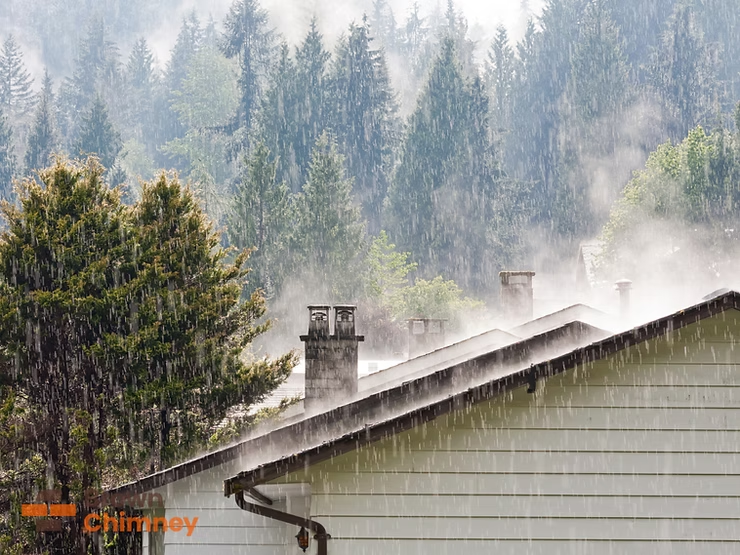
Almost every expensive chimney repair started as absorbed water. Brick takes moisture in, and when that water freezes, heats, or carries salts, it works the masonry apart from inside — spalling faces, efflorescence, deteriorating joints. Sealing the surface stops liquid water at the door while leaving the exit open for vapour, which is why the vapor-permeable requirement isn't a preference.

Timing and order matter more than product. Sealer goes on masonry that is sound, clean, and dry — never over failing joints, never over damp brick, never as a substitute for repair. It's cheapest and most effective right after repointing, while the joints are fresh and we're already on the roof. If the crown is cracked as well, that gets addressed first too — crown repair closes the largest water entry point on the structure, and sealing the walls below it while the top is still open just delays the same leak.

Related reading: does a chimney still need waterproofing if you barely use it — the short answer is that weather doesn't care how often you light a fire.
document icon
When to book

When is chimney waterproofing worth doing?

Waterproofing is preventive, not corrective — it protects sound masonry rather than repairing failed masonry. These are the situations where it earns its cost.

01

You've just had the chimney repointed and the joints are fresh

02

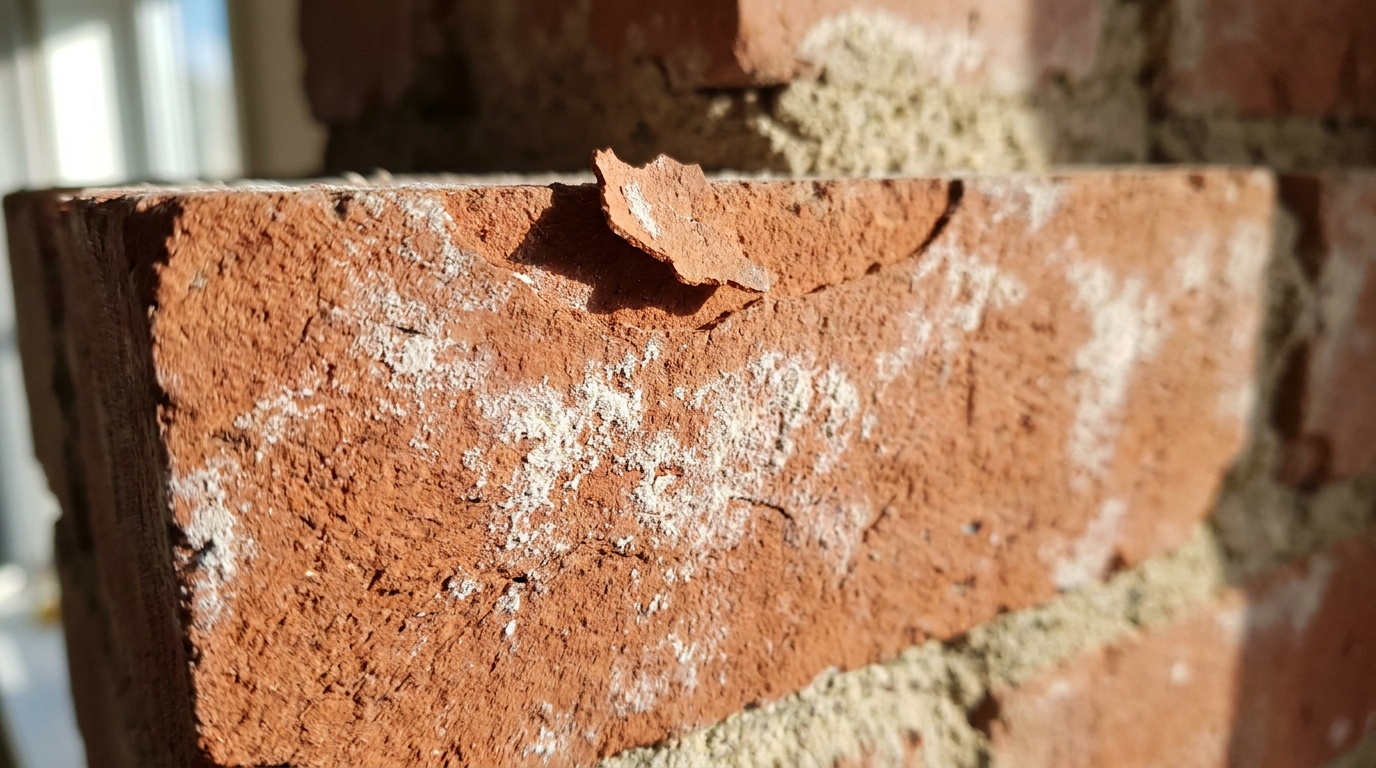
White staining (efflorescence) is appearing on the brick

03

The brick face feels damp or darkens noticeably after rain

04

Early spalling — small flakes lifting off brick faces

05

The chimney is exposed on all sides with no shelter from weather

06

It has never been sealed and the masonry is still in good condition

If the joints are already failing or brick faces are spalling through, sealing won't hold — repair comes first. A $49 inspection tells you which stage you're at, and the fee credits toward the work.

"

Brick needs to breathe. Seal it with the wrong product and you've trapped the water inside — we've replaced more brick ruined by bad sealer than by bad weather.
Company Owner
cup icon
The Brown Chimney Standard

Built to last. Backed in writing.

1-year workmanship warranty
Every piece of structural labor we perform is covered for a full year — in writing, not in promises.
Same crew, every visit
You get a W-2 technician you'll recognize next year — not a rotating cast of subcontractors.
Photos before, during, after
Your report documents the work at every stage. You see exactly what was done and why.
Price fixed before we start
Measured on site, quoted in writing, approved by you — then the work begins. Never the other way around.
stack icon
What to expect

What happens during chimney waterproofing?

Waterproofing is a single visit on sound, dry masonry. Two coats are applied to full coverage — a one-coat shortcut is the kind that shows up as failure a few seasons later.

01

Masonry condition check

Sealer doesn't fix failing joints. If the mortar is deteriorated, tuckpointing comes first — and we'll tell you that before taking money for a coating that can't hold.

02

Cleaning & drying the masonry

Masonry has to be clean and dry before anything is applied. Debris, efflorescence, and loose material are cleared from every exposed face above the roofline.

03

First coat application

A penetrating vapor-permeable sealer goes on all exposed brick and mortar above the roofline. Never film-forming — a sealed skin traps moisture inside the masonry and destroys brick faster than rain ever would.

04

Second coat

A second coat is applied over the first. Two coats is the standard here; a single coat is the shortcut that shows up as failure a few seasons later.

05

Inspection & photo report

Coverage is checked across every face, the finished work photographed for your report, and backed by the 1-year workmanship warranty on all labor performed.

Interactive · seal readiness

Should your chimney be sealed — or repaired first?

Sealer protects sound masonry; it cannot fix a failing joint, and a film-forming product traps water inside the brick. Set your chimney's condition below and watch what a two-coat vapor-permeable sealer actually changes — then see the order the work should happen in.

Rain on untreated masonry
Water into the brick: Deep Vapour can escape: Yes, but it keeps refilling
Repair first

Sealing this today would be the wrong call

With crumbling joints and spalling faces, water is already past the surface. A coating over failed masonry hides the problem and can trap the moisture that is in there. Repair, then seal — in that order.

  1. 01Crown assessed and sealed or repaired$249–$875

    Crown sealing is our published range for structurally intact crowns. If it is cracked through, crown repair is measured on site — sealing walls under an open crown just delays the same leak.

  2. 02Tuckpointing — mortar joint repair$595–$4,995

    Deteriorated joints are ground out and repacked with refractory-grade mortar tooled to match. Sealer cannot bridge a failing joint, so this comes first.

  3. 03Spalled brick replacement or rebuild scopeMeasured on site

    Faces already flaking through mean water is inside the brick. Replacement is priced after the damaged brick count is taken.

  4. 04Brick sealer & waterproofing — two coats$2,725

    Penetrating vapor-permeable sealer applied to full coverage on all exposed brick and mortar above the roofline. Never film-forming.

  5. 05Lift / scaffolding add-on$1,249

    Added only when standard ladder access is not safe, and documented with photos before it is charged.

  • Sealer typeVapor-permeable, two coats
  • Chimney profileLarge / tall — upper end of range
  • Order of workRepair first, seal after
  • Warranty on labor1 year
  • $49 inspection credited toward work−$49
Brown Chimney · Vapor-permeable sealer, two coats, 1-year workmanship warranty Prices are our published ranges — final figure measured on site and quoted in writing.
stack icon
For transparency

What this visit doesn't cover.

Tuckpointing, if the joints have deteriorated — that comes first and is quoted separately

Crown sealing, which uses a different product and is priced as its own line

Masonry below the roofline, which sits in a different exposure and is assessed separately

stack icon
FAQs

Common questions about chimney waterproofing

1 icon

Does chimney waterproofing actually work?

On sound masonry, yes. A penetrating vapor-permeable sealer stops liquid water entering the brick while still letting absorbed moisture escape as vapour. What it cannot do is repair failed joints or cracked brick — Brown Chimney assesses the masonry first and says so when repair is what's needed.
Faq Number

What's the difference between vapor-permeable and film-forming sealers?

A vapor-permeable sealer penetrates the brick and repels water while letting moisture escape outward. A film-forming sealer coats the surface and traps moisture inside the masonry, where it does more damage than rain. Brown Chimney uses vapor-permeable products only, without exception.
3 icon

Should I waterproof before or after tuckpointing?

After, always. Sealing deteriorated joints achieves nothing — the water simply enters through the failed mortar. Repointing comes first, then the sealer goes on fresh, sound masonry. Doing both in the same visit is the cheapest sequence, since the access is already set up.
4 icon

How often does a chimney need resealing?

It depends on exposure, orientation, and the product used. Brown Chimney checks the condition of previously sealed masonry during annual inspections, so resealing is flagged in your photo report when it's genuinely due rather than sold on a fixed schedule.
5 icon

Is waterproofing worth it on a chimney I never use?

Weather doesn't care whether you light fires. An unused chimney takes the same rain, sun, and temperature cycling as a working one, and absorbs water the same way. If the masonry is sound, sealing it is one of the cheapest ways to keep it that way.
stack icon
A safer hearth — for 2026

Sealed properly — or repaired first.

Every Brown Chimney waterproofing job starts with a masonry assessment, uses vapor-permeable sealer in two coats, and is backed by a 1-year workmanship warranty. Book online or call 1-888-666-0002.