
Why Do Chimney Crowns Crack?
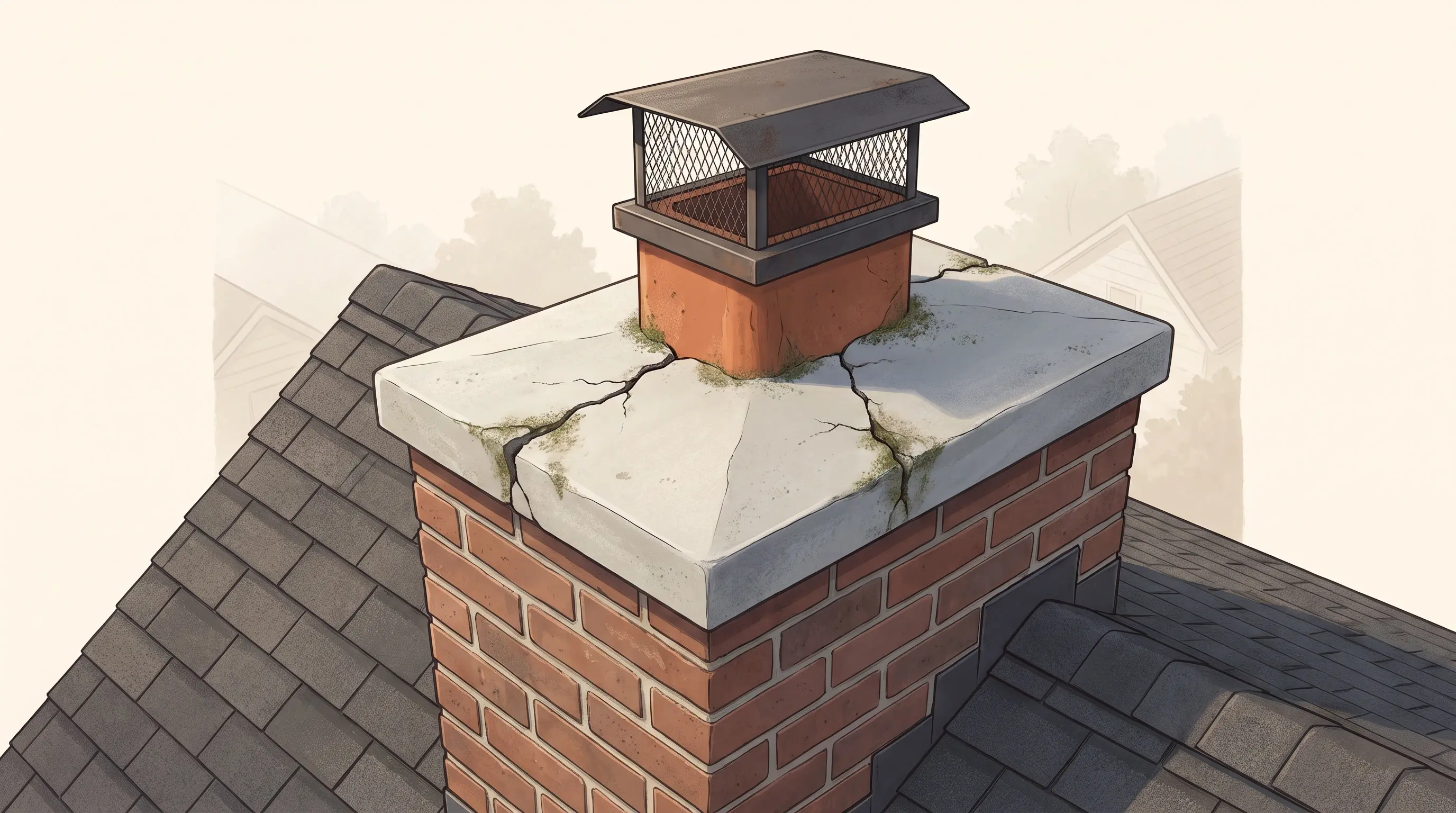


Chimney crowns crack when moisture, temperature changes, movement and construction weaknesses put stress on the top of the chimney. Water that freezes inside wet concrete can widen existing damage. A thin crown, poor drainage, rapid drying during construction or a rigid connection around the flue can also contribute. The right repair depends on both the cause and whether the crown underneath remains sound.
A crack deserves attention before you choose a coating or approve a rebuild. This guide explains the main causes, what an inspection should establish, and how to compare the available repairs.
What Is a Chimney Crown?
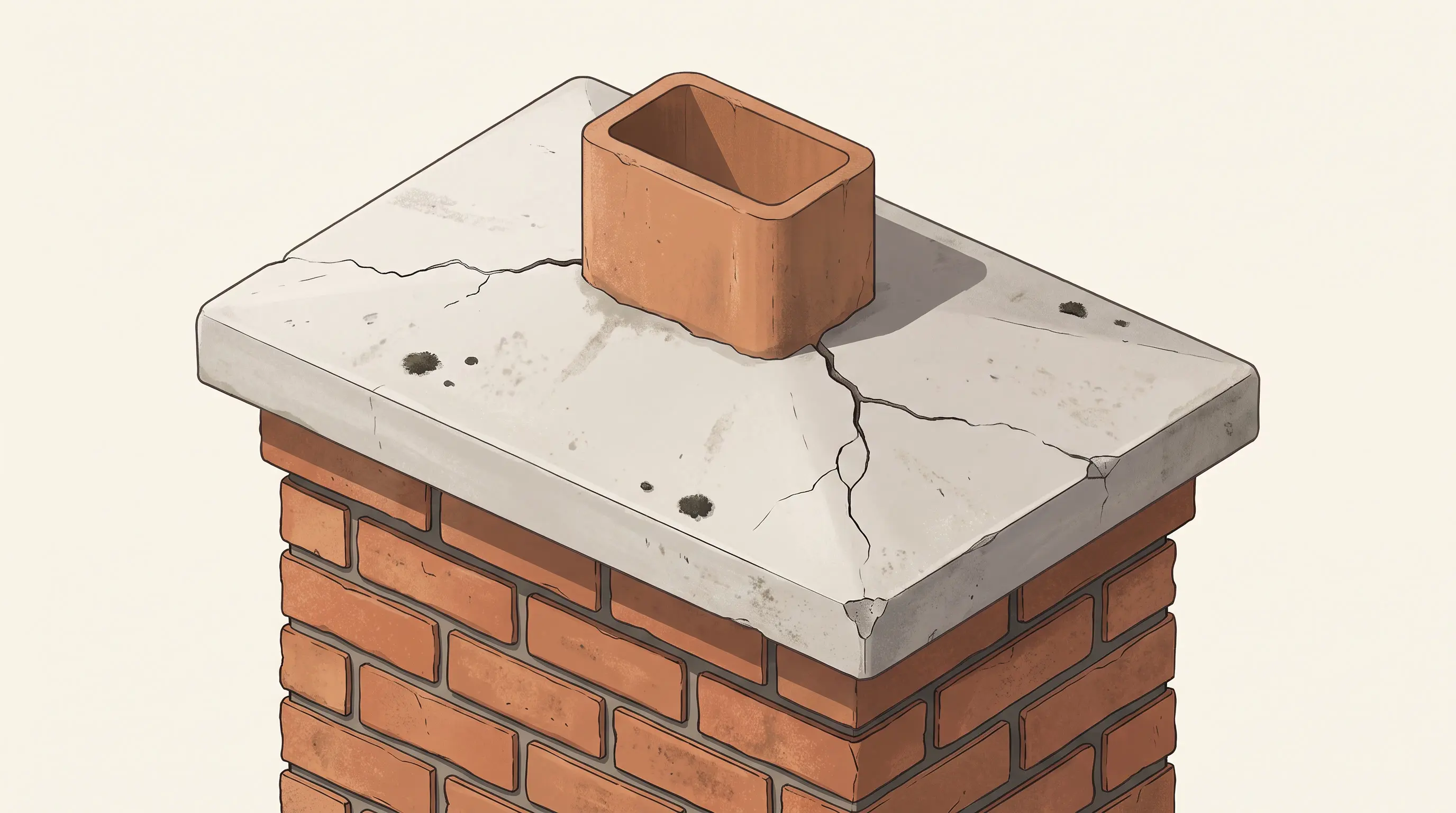
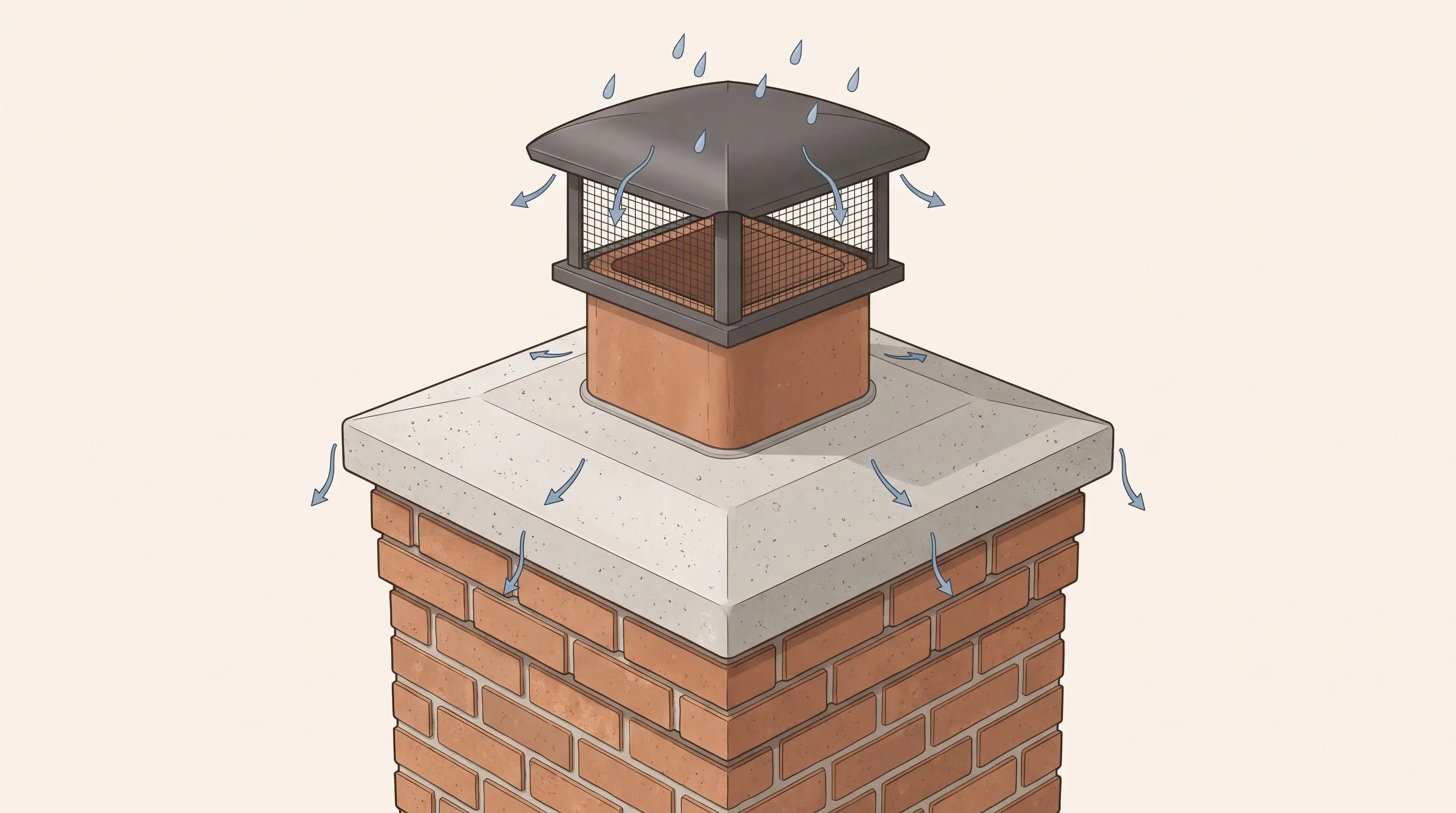
The crown is the protective top covering around the flue opening of a masonry chimney. A properly detailed crown sheds water away from the brickwork. Its slope, edge profile and joints all affect that job.
The metal rain cap sits above the flue opening. A metal chase cover typically closes the top of a framed chimney enclosure. These components serve different assemblies, so ask which part is damaged when a report uses the general term “chimney cap.” This article focuses on cracking in concrete crowns and older mortar washes on masonry chimneys.
What Causes a Chimney Crown to Crack?
1. Repeated Freezing and Thawing
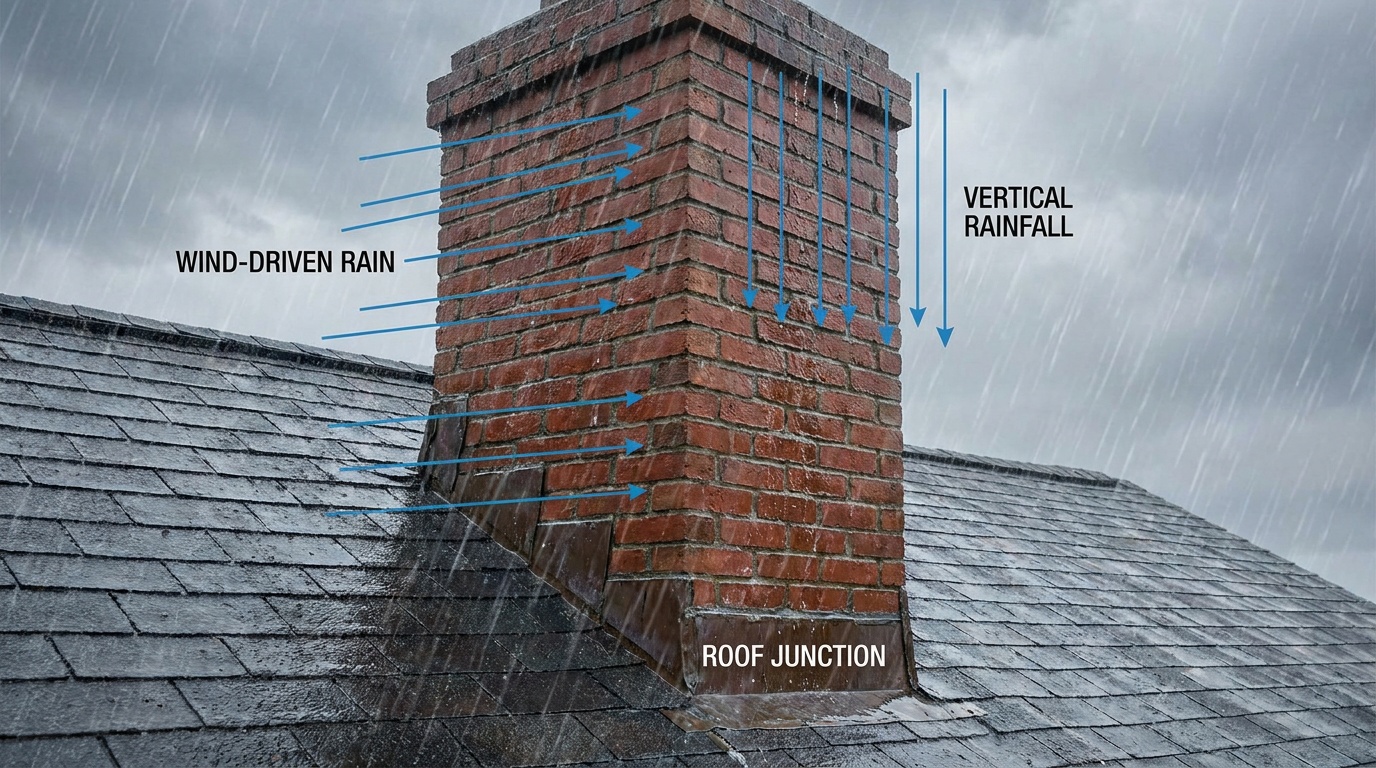
Concrete contains pores that can hold water. When sufficiently wet concrete freezes, ice formation creates internal pressure. Repeated cycles can cause surface flaking and worsen existing deterioration. A crack that admits more rain can help keep the affected area wet between cold spells.
The useful question is how much moisture reaches the crown and how well it drains. A winter inspection should consider both the visible damage and the conditions that keep feeding it.
2. Restricted Movement Around the Flue
The flue lining and surrounding masonry do not necessarily move together as temperatures change. A rigid connection can transfer that movement into the crown. The junction around a projecting clay flue therefore needs a suitable separation and sealing detail.
A gap beside the tile is not automatically something to pack with hard mortar. The inspector should establish whether an intended movement joint has failed or whether the crown itself has fractured. Those findings call for different repairs.
3. Shrinkage and Poor Curing During Construction
New concrete can crack before it has been through its first winter. Wind, heat and dry air can remove surface moisture too quickly while it is setting.Concrete also changes volume as it dries, and restraint can turn that movement into cracks. Mix selection, finishing and curing affect the outcome — the National Ready Mixed Concrete Association’s bulletin on cracking in concrete surfaces sets out the same mechanisms for concrete generally.
If a recently rebuilt crown develops cracks, document when they appeared and contact the installer. Ask what the crack pattern suggests and how the repair will address its cause. A new surface should not automatically be dismissed as weathered simply because it is outdoors.
4. Thin Edges, Weak Materials or Poor Drainage
A thin mortar wash tapered onto the brickwork has less substance at its edges than a properly designed crown. Flat spots can retain water, while missing or ineffective overhang and drip details leave the masonry below more exposed.
Covering a weak, poorly shaped top with a fresh surface layer may leave those shortcomings in place. Crown thickness, material condition and water-shedding details should be evaluated together.
5. Movement or Deterioration Beneath the Crown
Some cracks belong to a larger masonry problem. Displaced bricks, deteriorated supporting courses or movement in the stack can affect the crown above them. A repair confined to the surface will not correct an unstable base.
Cracks that continue from the crown into the brickwork, uneven sections or loose pieces warrant a wider assessment. Photographs can help document changes, but a photograph alone cannot establish the depth or stability of a crack.
What Can the Crack Pattern Tell You?
Appearance helps organize an inspection. It does not establish a diagnosis by itself.
Ask for photographs of the whole crown as well as close-ups. A report that identifies the likely cause and remaining sound material is more useful than a description that only says “cracked.” Avoid climbing onto the roof to make these checks yourself.
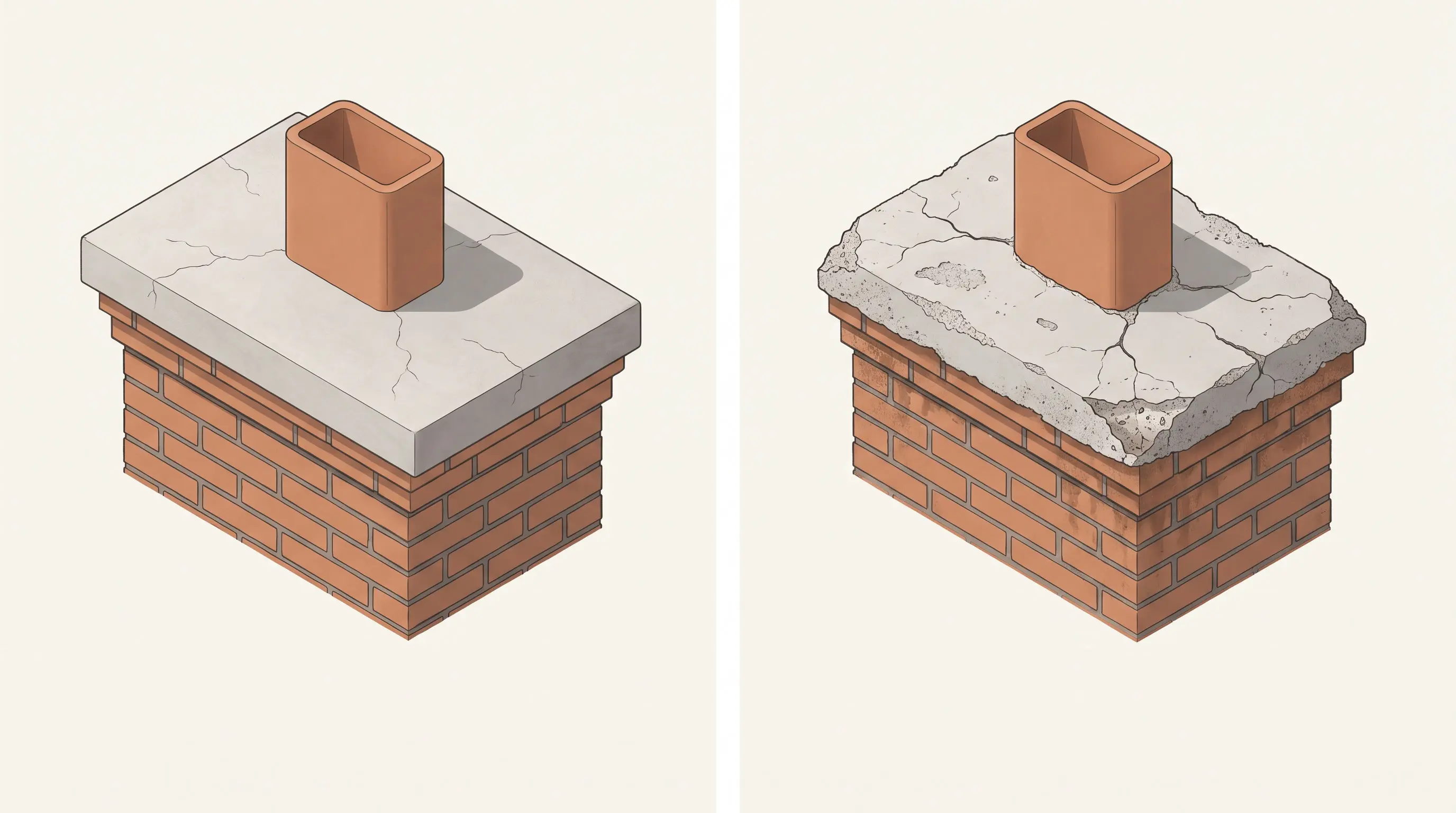
Can a Cracked Chimney Crown Be Repaired, or Does It Need Rebuilding?
A repair needs a suitable, sound base. A crown coating may be appropriate after preparation and compatible crack repair. For example, the CrownCoat manufacturer requires a structurally sound surface and sets application conditions for moisture and temperature. A coating cannot make loose material load-bearing or correct movement in the stack.
Request an explanation of what the proposed work corrects. If a quote includes a rebuild, ask why repair is unsuitable. If it includes a coating, ask which defects must be corrected before that coating is applied.
How Brown Chimney Calculates Repair and Rebuild Costs
Brown Chimney’s published calculator uses crown length and width in inches. Multiply the two measurements, then add the applicable base fee:
- Repair: (length × width) + $500 with standard access, or + $1,000 with hard access.
- Rebuild: (length × width) + $1,500 with standard access, or + $2,000 with hard access.
A 36 × 36-inch crown repair with standard access gives (36 × 36) + $500 = $1,796, before separately applicable work or equipment. Areas above 1,800 square inches require supervisor review. Crack sealing is assessed and quoted on site.
Use the chimney crown repair and rebuild cost calculator to compare the scope. These figures were checked on October 18, 2026; the written project quote confirms the final price.
Does a Chimney Cap Protect the Crown?
A correctly fitted rain cap helps keep precipitation out of the flue opening. The crown handles water at the top of the surrounding masonry. How much crown surface a cap shelters depends on its design and coverage.
A cap cannot close an existing crown crack. Both components need to function correctly. Our guide to chimney cap installation explains the cap side of that protection. Have its fit, mounting and clearance assessed alongside the crown.
How Can You Reduce the Risk of More Crown Damage?
- Include the crown in regular chimney inspections. Keep the photographs and findings so later changes can be compared.
- Address the cause of recurring cracks. Ask about movement, drainage and the underlying material before approving another surface treatment.
- Follow the repair product’s requirements. Preparation, compatible materials and suitable weather affect adhesion and curing.
- Maintain the surrounding masonry. A crown repair addresses one part of the chimney’s protection from water.
Little fireplace use does not stop outdoor weather exposure. Our explanation of why a rarely used chimney may still need waterproofing covers that separate maintenance question. A masonry water repellent and a crown repair coating serve different purposes; neither should be selected as a substitute for necessary structural repairs.
Frequently Asked Questions About Cracked Chimney Crowns
Are hairline cracks in a chimney crown normal?
Fine cracks can occur as concrete changes volume, but their appearance alone does not establish whether they are harmless. Have the depth, surrounding material and evidence of water entry assessed before deciding whether monitoring or repair is appropriate.
Can a chimney crown crack if the fireplace is never used?
Yes. Rain, outdoor temperature changes, freezing conditions and construction defects can affect a crown independently of fireplace use. An unused fireplace still leaves its masonry chimney exposed to the weather.
Will waterproofing fix a cracked chimney crown?
A water-repellent treatment for brickwork does not rebuild a damaged crown. A suitable crown-repair coating may help protect a prepared, sound surface, but loose material, defective construction or continuing movement may require other work.
Does a cracked crown mean the whole chimney needs rebuilding?
No. The crown may be the only component needing repair or replacement. The inspection should establish whether damage continues into the brickwork, flue or other parts of the chimney before the scope is expanded.
Why did my chimney crown crack again after repair?
A recurring crack can indicate continuing movement, moisture exposure, inadequate preparation or an unsuitable repair system. Ask the contractor to reassess the cause and the supporting material before applying another patch.
Can I use my fireplace with a cracked chimney crown?
A visible crown crack alone cannot establish whether the fireplace is safe to use. Have the chimney assessed. Stop using it pending inspection if there is suspected flue damage, falling masonry, smoke entering the room or evidence of a chimney fire.
Get the Cause and Repair Scope Confirmed
Before approving work, ask for the observed damage, the recommended treatment and any additional masonry work to be separated in writing. Keep the inspection photographs with the quote so you can see what each line item addresses.
Brown Chimney’s chimney repair service covers crown work and related masonry repairs. Request an assessment to confirm the crown’s condition and the scope needed for your chimney.


RELATED ARTICLS

Schedule an Inspection Now
with expert chimney care.