Chimney Waterproofing in Wellesley
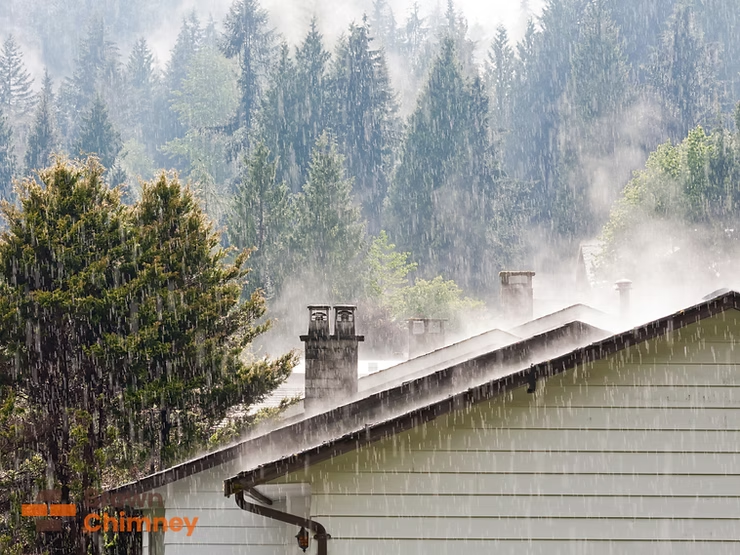
Brick has to dry outward — seal it with the wrong product and the water stays in
★
4.9 · 75 Wellesley reviews
✓
CSIA & NFPA certified
✓
$49 fee credits toward repairs
✓
Same-day PDF report

Brick has to dry outward — seal it with the wrong product and the water stays in
★
4.9 · 75 Wellesley reviews
✓
CSIA & NFPA certified
✓
$49 fee credits toward repairs
✓
Same-day PDF report

On a pre-war chimney the honest order is joints, then crown, then sealer. Waterproofing failing masonry locks the damage in. The $49 visit establishes the order before anything is quoted.
Live
waterproofing
Quoted after masonry assessment
Inspection (credited)
−$49
Typical job
Two-coat application
Final price quoted in writing before any work.

Start with what this is not. Waterproofing is not paint and it is not a coating that sits on the surface. Brown Chimney uses vapor-permeable penetrating sealers only, never film-forming products. The difference matters: masonry takes on moisture and has to release it outward again. A film traps that moisture behind it, and in a freezing climate trapped water is what breaks brick.
Applied correctly, it is two coats of penetrating sealer across all exposed brick and mortar above the roofline, on masonry that is clean and dry. It repels liquid water while still letting vapor pass. On soft pre-war Wellesley brick, which absorbs far more readily than modern brick, that combination is the whole point.
The order is not negotiable. Sealer will not fix a failing joint — it will seal water into one. So repointing comes first where the mortar has gone, and the crown is dealt with before anything is applied, because water arriving from the top does not care what is on the face. Pricing follows the masonry assessment. Our waterproofing service page sets out the products and the method.
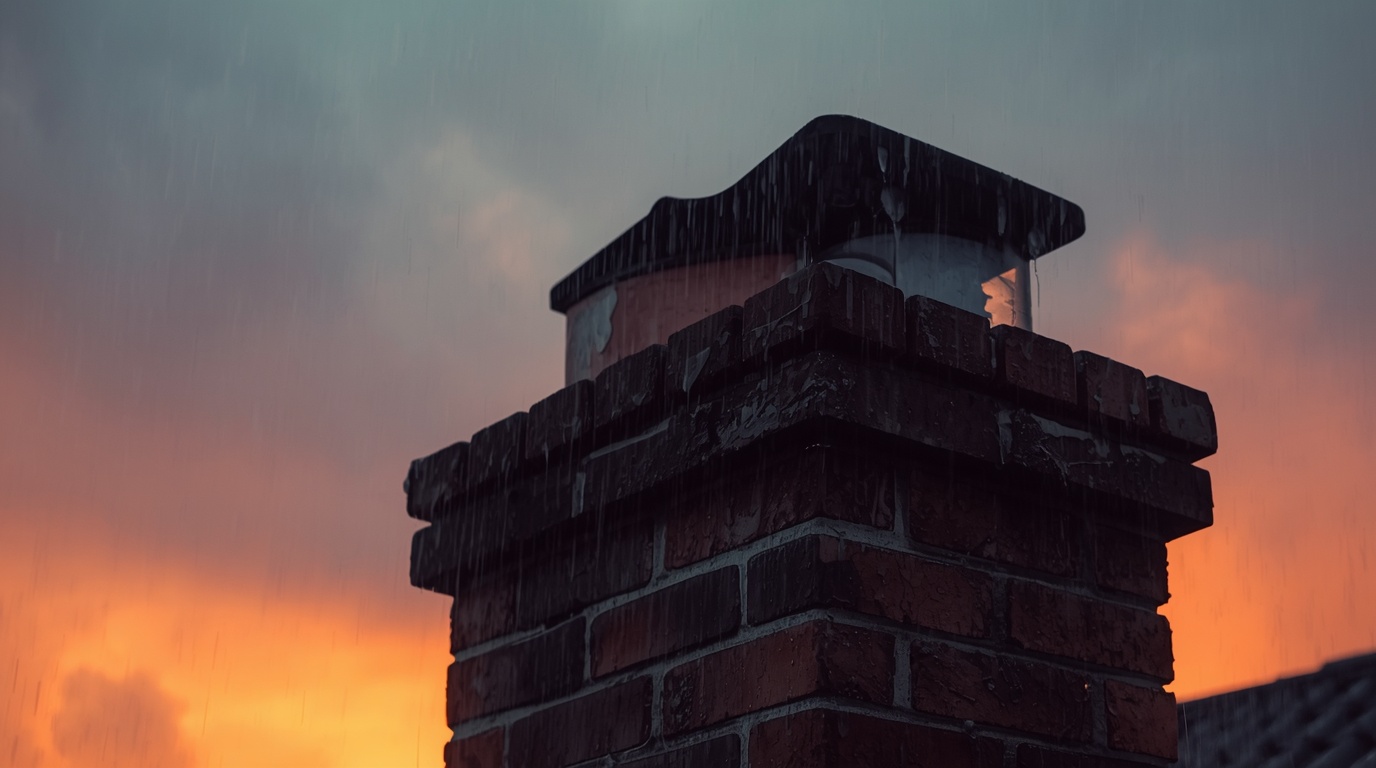
Two-coat vapor-permeable sealer on clean, dry masonry

Water enters brick through the pores and through open joints, and it leaves the same way when the weather turns. That cycle is survivable. What is not survivable is water that gets in and then cannot get out, because when it freezes it expands, and the expansion happens inside the brick rather than on it. That is spalling — the face flaking off in sheets.
A film-forming sealer produces exactly that condition. So does sealing masonry that is still damp, and so does sealing over joints that are already letting water in behind the face. On a north-facing Wellesley chimney that stays wet into April, the timing of the application matters as much as the product. It applies even to a fireplace you never light — the weather does not know whether you burn.
Masonry sealing runs from both Massachusetts offices — Burlington takes the northern towns, and the state page covers the rest. Everything available here is on the Wellesley page.
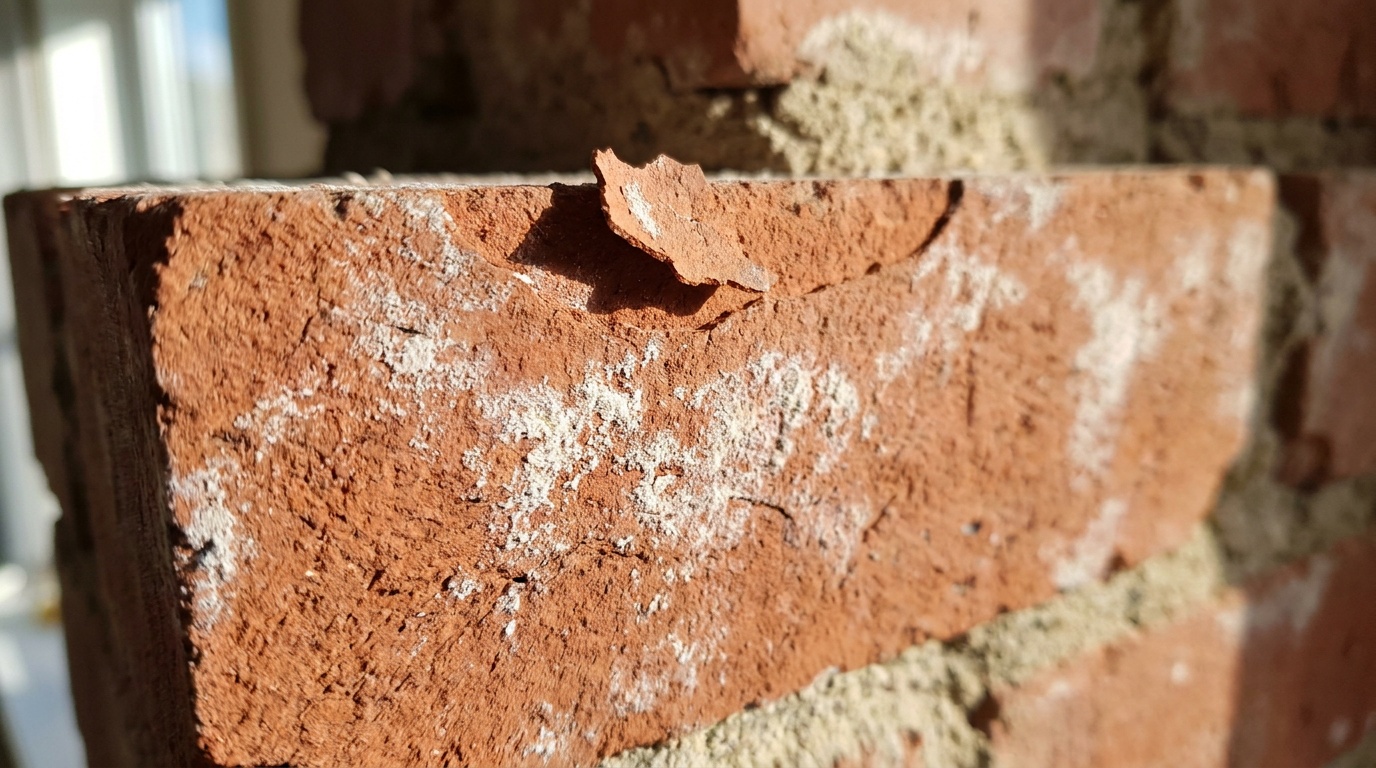

Waterproofing is preventive, so the signs are early ones rather than failures. On the older half of this town they show up on the weather side first — usually the north and east faces.
The last one is not damage — it is timing. Freshly repointed masonry is the ideal moment to seal, because the joints are sound and the sealer is protecting sound work rather than hiding failing work. It is offered after every tuckpointing job for that reason.
"
Brick needs to breathe. Seal it with the wrong product and you've trapped the water inside — we've replaced more brick ruined by bad sealer than by bad weather.

The masonry is assessed before anything is quoted, because sealer only goes onto sound, clean, dry brick. Where joints or the crown need attention first, that is said plainly and this job waits. Application itself is usually half a day. Weather decides scheduling more here than access does — a chimney that has taken rain in the last few days is not ready, and we would rather rebook than seal in moisture.
01
Sealer doesn't fix failing joints. If the mortar is deteriorated, tuckpointing comes first — and we'll tell you that before taking money for a coating that can't hold.
.jpg)
02
Masonry has to be clean and dry before anything is applied. Debris, efflorescence, and loose material are cleared from every exposed face above the roofline.
03
A penetrating vapor-permeable sealer goes on all exposed brick and mortar above the roofline. Never film-forming — a sealed skin traps moisture inside the masonry and destroys brick faster than rain ever would.
04
A second coat is applied over the first. Two coats is the standard here; a single coat is the shortcut that shows up as failure a few seasons later.
05
Coverage is checked across every face, the finished work photographed for your report, and backed by the 1-year workmanship warranty on all labor performed.
Failing joints. A sealer cannot bridge open mortar and it will not try. Where the joints have gone, repointing is quoted first and this work follows it as a separate line.
The crown. Water coming through a cracked slab on top bypasses the face of the chimney entirely. Sealing the brick does nothing about it.
Brick that has already spalled through. Once the face is gone, sealing preserves the damage rather than reversing it — those bricks are replaced individually and quoted on their own.


Every Brown Chimney job in Wellesley is measured on site, priced in writing, and started only after you approve it. Structural labor carries a 1-year workmanship warranty. Call 781-547-7784 or book online.