
Chimney Removal vs. Repair: How to Decide


At some point most owners of an aging masonry chimney ask the same question: is this thing worth keeping? The mortar is crumbling, there is a stain on the ceiling, and a contractor has quoted a number that makes tearing the whole thing down sound reasonable.
It sometimes is. But the decision is not really about the condition of the chimney — it is about whether you use it, how far the damage runs, and whether the structure is doing a job beyond venting smoke. Those three questions settle almost every case, and they settle it before price ever enters the conversation.
This guide walks through both options honestly, including what each actually costs, so the choice is made on evidence rather than on whichever quote landed first.
In this guide, we'll explain:
- The question that actually drives the decision
- What a chimney removal involves
- What a chimney repair involves
- Four scenarios and what each one points to
- How the numbers compare
- What removal does not solve
- How the decision gets made properly
The Question Behind the Question
Homeowners usually open with "how much to fix it" or "how much to take it down." Both are the wrong first question, because the same chimney can justify either answer depending on one thing: do you actually use the fireplace?
If the answer is no — and for a large share of the homes we look at, it genuinely is no — you are being asked to spend thousands maintaining a feature you do not use, on a structure that will keep deteriorating whether or not anyone lights a fire in it. Removal stops that clock permanently.
If the answer is yes, the calculation changes completely. A working fireplace is worth repairing, and the question moves to how far the damage runs.
Everything else — the quotes, the timelines, the opinions from neighbors — follows from that one answer.
What Chimney Removal Actually Involves
A removal is not one job. It is two that always happen together, plus a few that depend on scope.
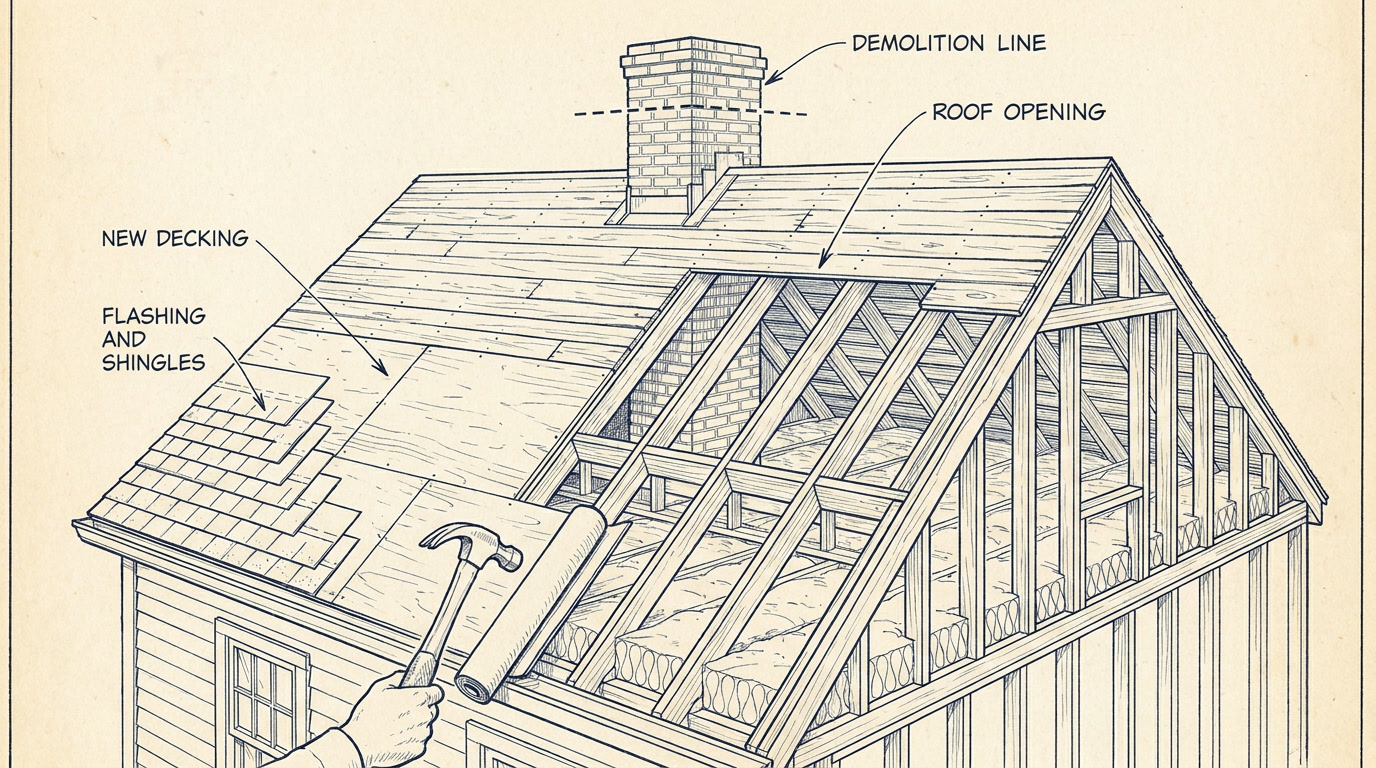
The demolition. The masonry comes down in courses rather than being pushed over, and basic debris is cleared from the site. This is the largest single line on the invoice.
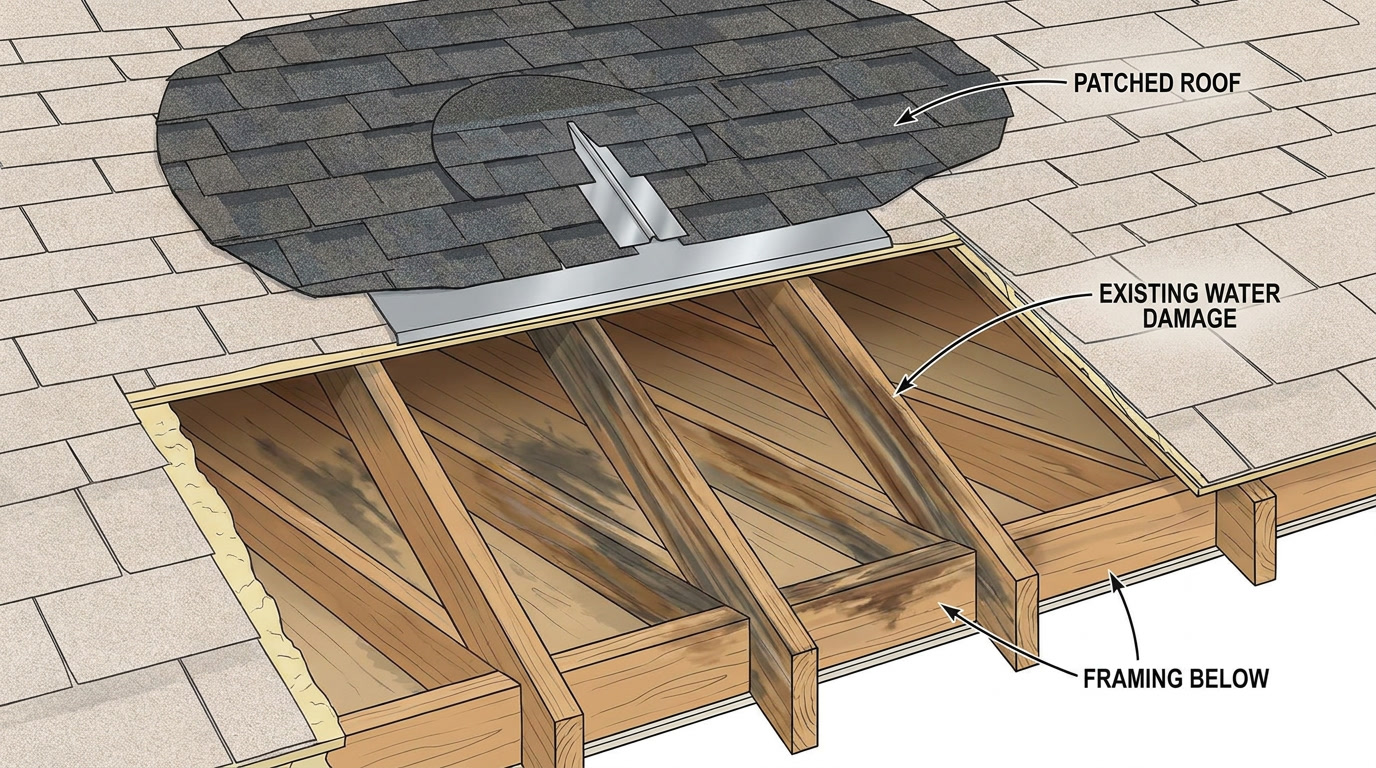
The roof patch. When the chimney leaves, there is a hole in the roof where it used to pass through. It has to be closed with new framing where needed, decking, membrane, flashing, and shingles matched as closely as the existing roof allows. There is no version of a removal that skips this. Any quote that does not include it is not a complete quote.
Beyond those two, larger or more complex demolitions can need a dedicated hauling and disposal run to a licensed facility, and interior removals add drywall, framing, and finish work where the chase used to run through the house.
Removal is also permanent in a way repair is not. Rebuilding a chimney later, if a future owner wants a fireplace back, costs substantially more than keeping the existing one standing would have. That is not an argument against removal — it is an argument for being sure.
What Chimney Repair Actually Involves
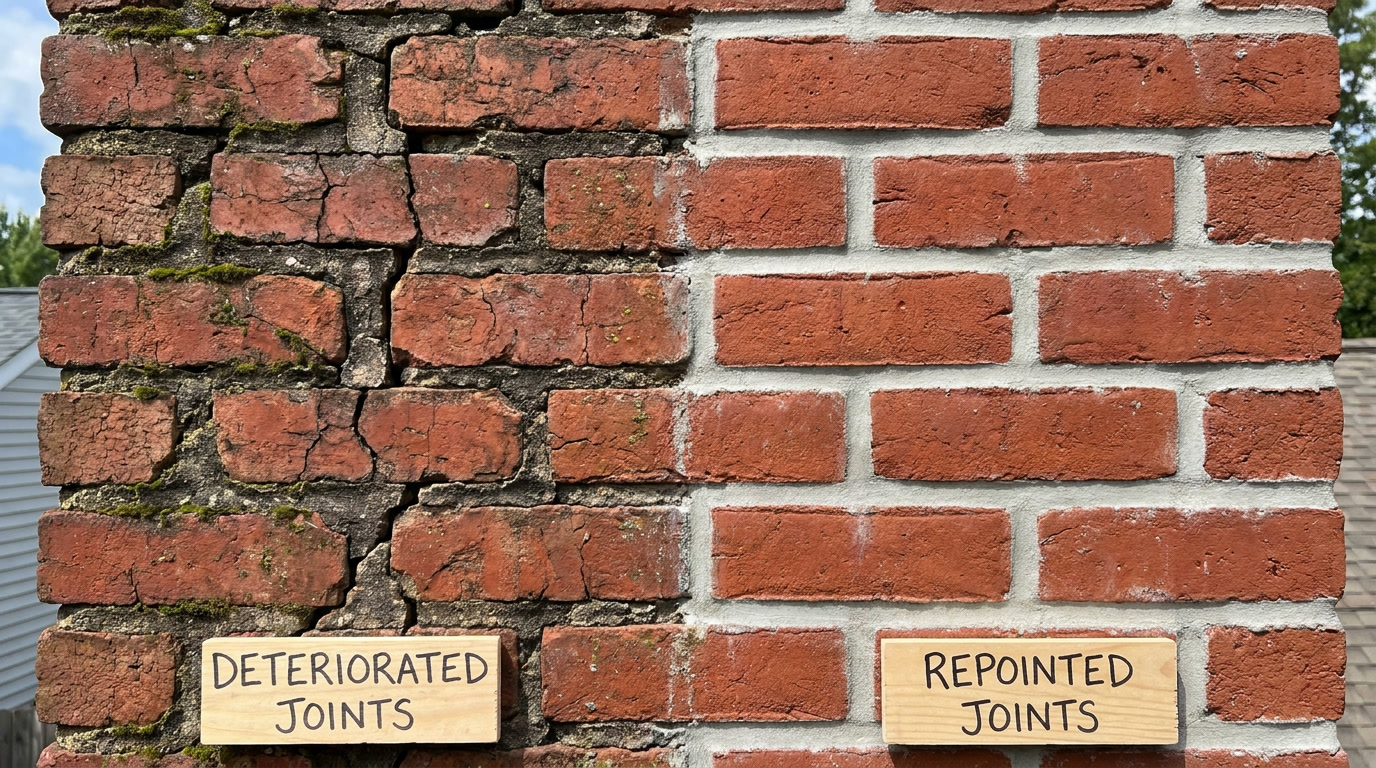
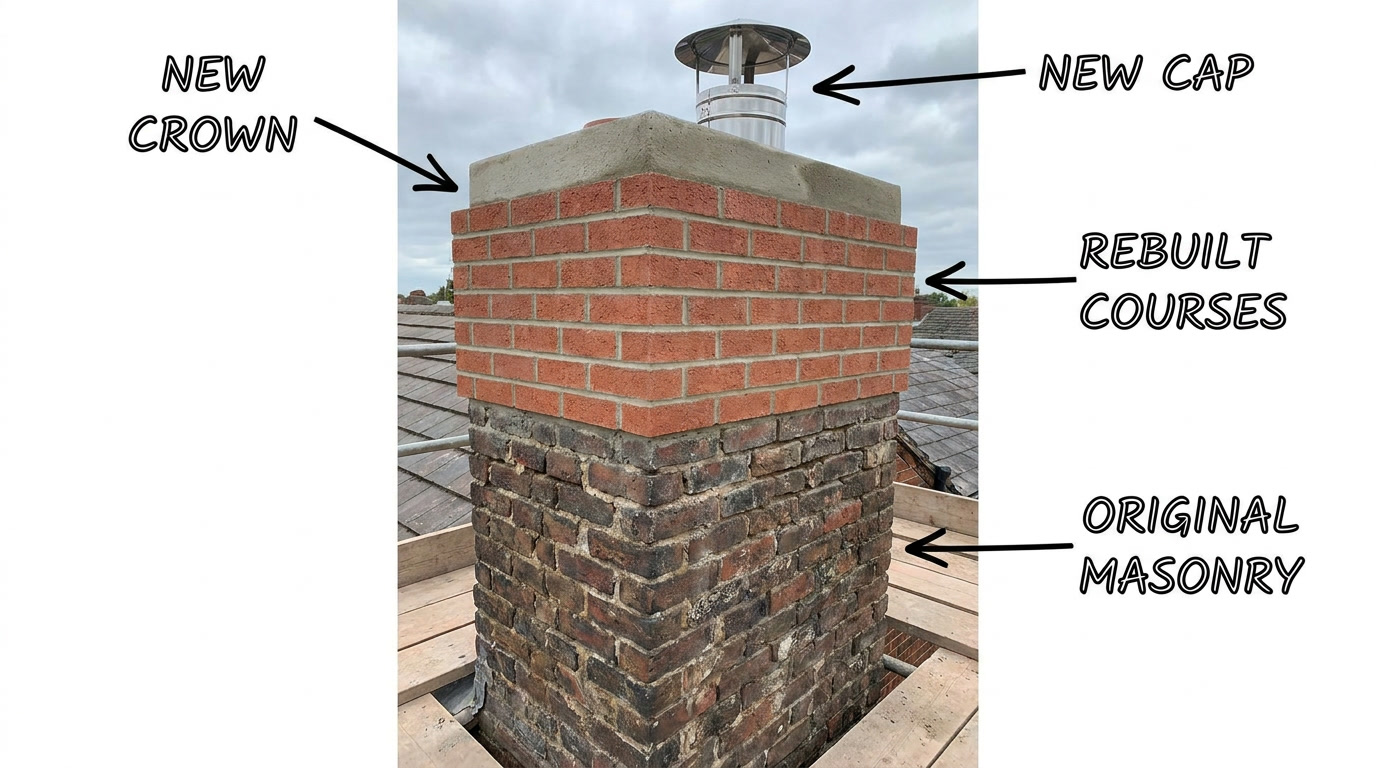
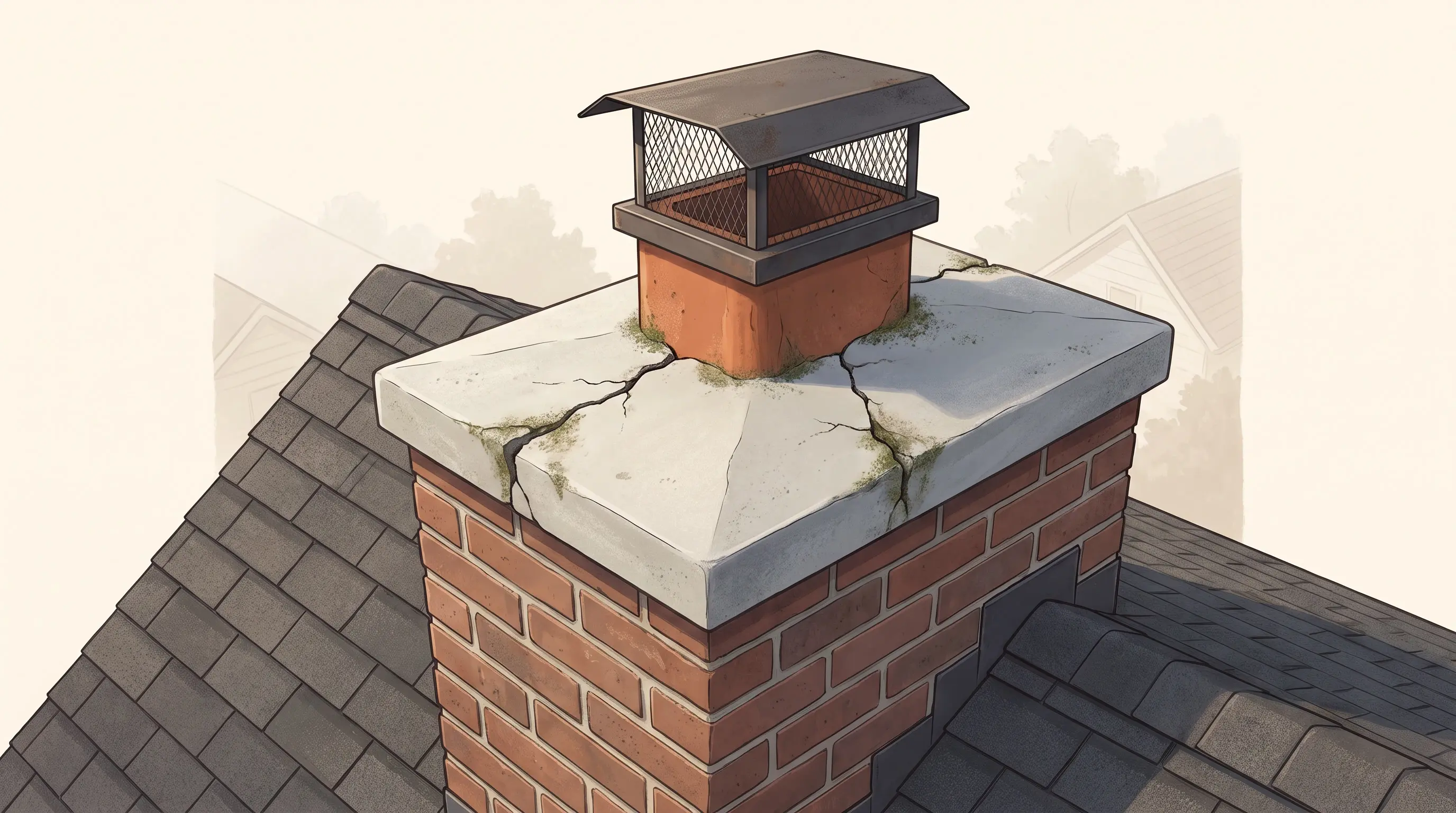
Repair is a range, not a single job, and that range is wide. At one end is repointing deteriorated mortar joints and sealing a hairline crack in the crown. At the other is taking the stack down to a sound course and rebuilding it brick by brick.
What most owners do not expect is that these are frequently the same chimney at different stages. Mortar joints that needed repointing three winters ago are the reason the stack now needs rebuilding, because open joints let water in and freeze-thaw did the rest. The Brick Industry Association documents the same failure sequence in masonry generally.
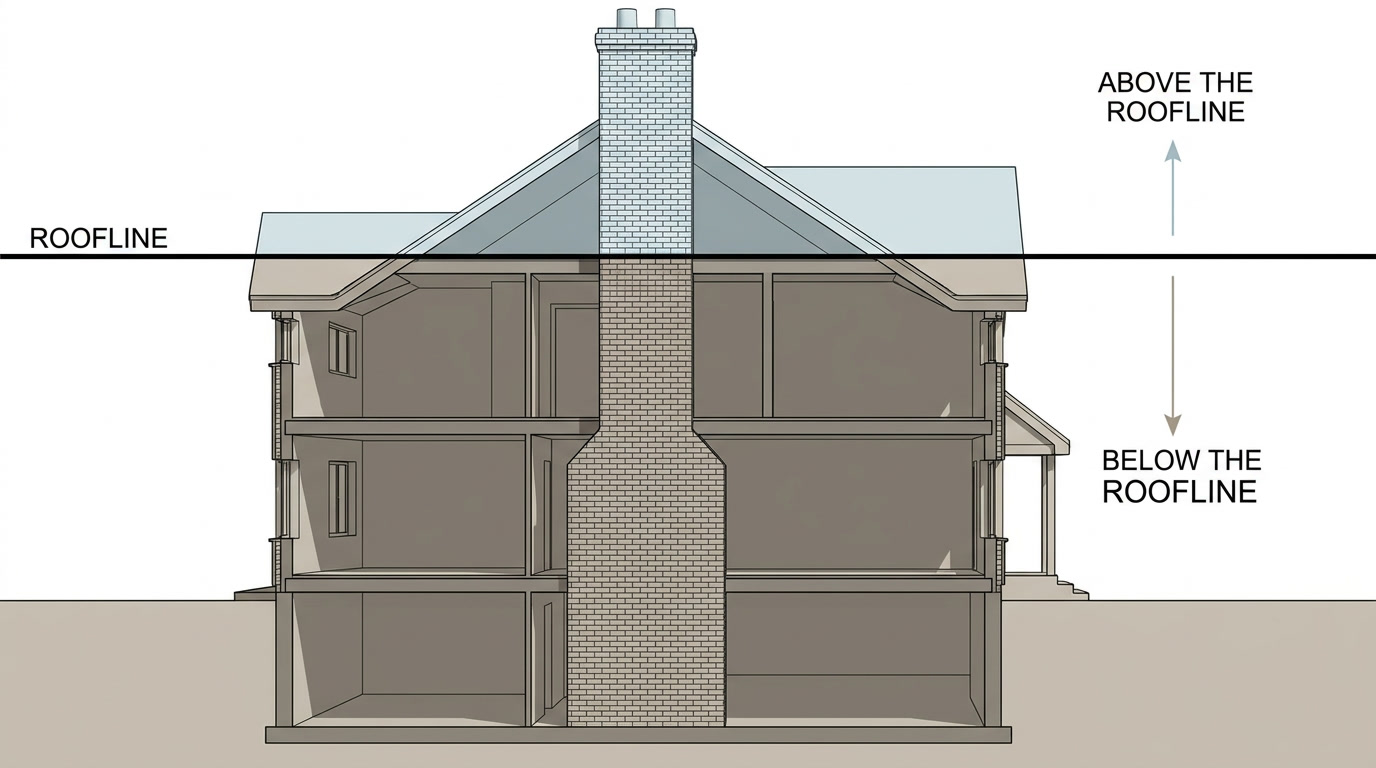
The scope is set by where the damage stops. Deterioration confined to the section above the roofline is a contained job. Damage that runs below the roofline, into the part of the chimney passing through the house, is a different order of work — and the point at which removal starts becoming a serious contender. Work at either end falls under the masonry repairs we take on.
Four Scenarios, Four Different Answers
Almost every chimney we assess falls into one of four situations. The right answer is different in each.
You Never Use the Fireplace
This is the clearest case for removal. An unused chimney still takes weather year-round, still lets water into the masonry, still needs a sound cap and crown to avoid becoming a leak. You are maintaining a liability rather than an amenity.
If part of what you liked was the fire itself, removal does not have to mean losing it. Modern direct-vent and electric units install without any masonry at all, and you can see what a new unit costs fully installed before deciding — an electric insert starts at $4,495, well under most full rebuilds.
You Use It and the Damage Is Above the Roofline
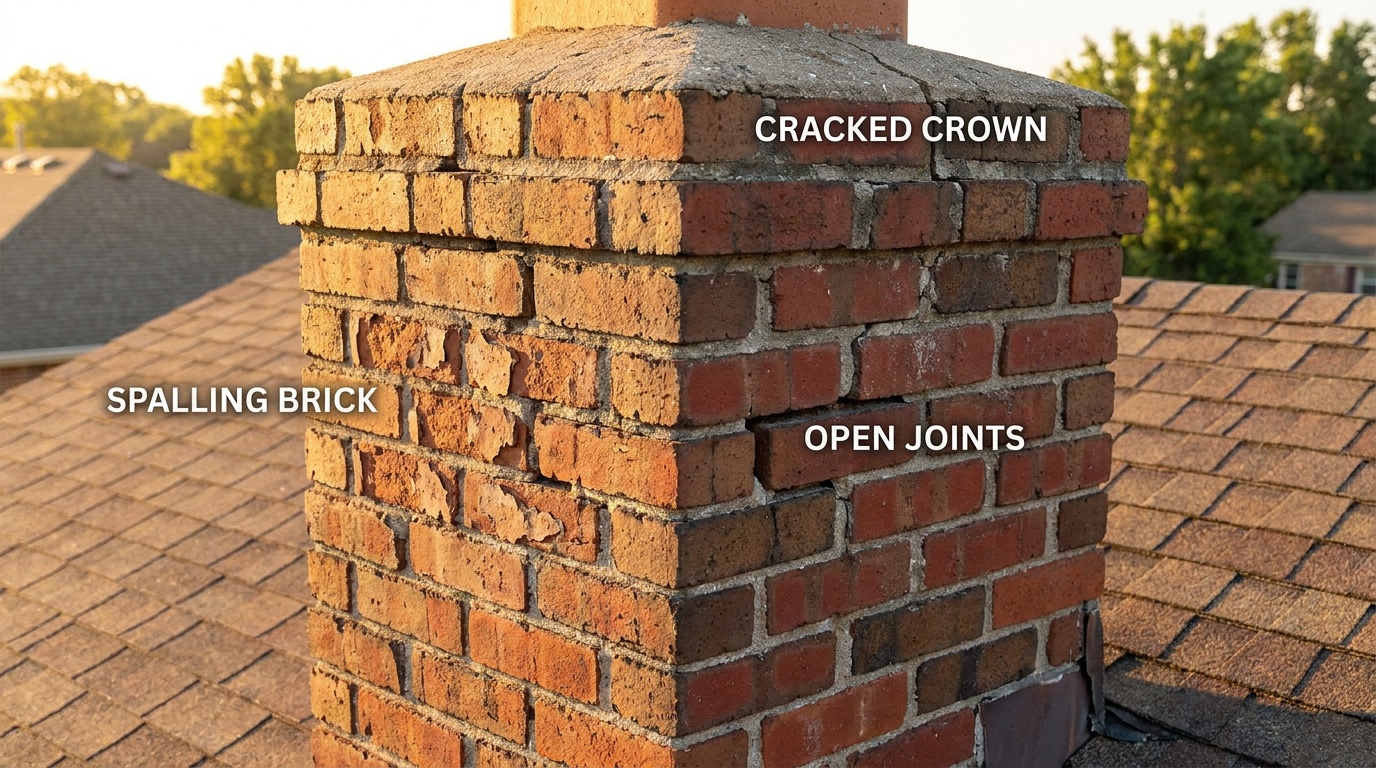
Repair, almost always. Damage confined to the exposed section — spalling brick, open joints, a cracked crown, a failed cap — is contained work on the part of the chimney that takes the most weather and the least structural load. Rebuilding that section restores the whole system without touching anything inside the house.
This is also the scenario where waiting costs the most. Every season an open joint or cracked crown goes unaddressed is another cycle of water working further down the stack, and the repair that would have been contained becomes one that is not.
You Use It and the Damage Runs Below the Roofline
Here the two options genuinely converge, and this is where an honest assessment matters most. A rebuild that reaches into the section passing through the house is major work: it means opening up interior finishes, and the brick count climbs fast. At that scale a removal and a rebuild can land closer together than most homeowners expect.
The deciding factor is usually how much you value the fireplace, not the arithmetic. Both prices are real; the question is what you are buying with the difference.
The Chimney Is Structural
Some chimneys are tied into the framing or carry load from the roof or floors, particularly in older construction. Removing one of those is not a masonry job with a roofing component — it is a structural alteration that needs a licensed structural engineer's involvement before anyone touches it.
We flag this during assessment rather than quoting around it. Permit requirements also vary by municipality — the International Residential Code is the baseline most local codes are built on — and we confirm what is needed before work begins. If a contractor quotes a removal on a structural chimney without raising either point, that is worth a second opinion.
How the Numbers Compare
Both jobs are priced from the same place: the amount of masonry involved and how hard it is to reach. Here is how each is actually calculated.
Removal starts at $1,495 for the demolition, with a minimum roof patch of $895 — roughly $2,400 for a straightforward exterior chimney with good access. Difficult access, interior chases, and larger stacks move it up from there, and complex demolitions may add a disposal run.
Rebuilding is priced by brick count using marginal tiers, the same way income tax brackets work: each rate applies only to the bricks inside that tier, so the price never jumps unfairly at a threshold. A 100-brick rebuild works out to $4,875 for the brickwork; 200 bricks comes to $8,875. Small sections of 1 to 15 bricks are quoted as a flat base plus a per-brick rate instead.
One thing that catches people out: a rebuild quote always includes a new crown, new flashing, and a cap. They are not optional extras, because you cannot pour a new stack and leave the old crown on top of it. Crown work is a length-by-width formula plus a base fee, flashing runs $595 to $3,495, and caps start at $375.
You can run both figures for your own chimney: price a removal or see how rebuild pricing works by brick count. Getting both numbers before deciding is the entire point — and you should expect any contractor worth hiring to give you both rather than only the one they would rather do.
What Removal Does Not Solve
Removal is the right answer often enough that it deserves a fair hearing. It also gets oversold, so a few honest caveats.
It does not fix an existing leak by itself. If water has been entering around the chimney for years, there may already be damage in the framing or ceiling below. The patch closes the opening; it does not undo what came before it.
It is permanent. Restoring a fireplace later means building new, at a cost well above what maintaining the existing chimney would have been. Worth weighing if you might sell within a few years, or if the fireplace is a feature of the room.
The effect on resale is genuinely situational. It depends on the market, the buyer, and whether the chimney was an asset or an eyesore. Anyone who gives you a confident number on that is guessing, and we are not going to make that call for you.
It is not always cheaper. An interior chase removal with drywall and finish work can exceed a straightforward exterior rebuild. Cheap and permanent are not the same thing.
How the Decision Should Get Made
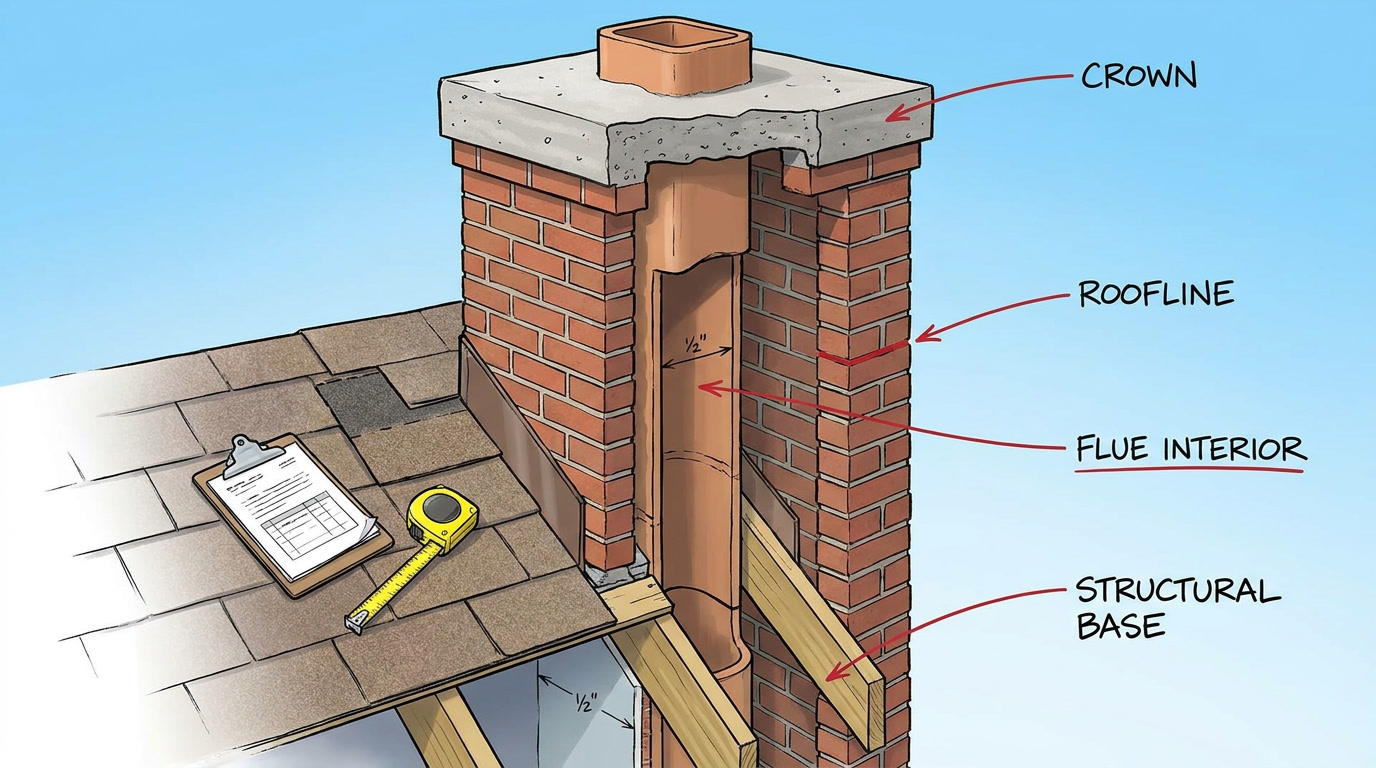
Neither option should be quoted from the driveway. What settles it is an assessment that answers four things in writing.
Where the damage stops. Above or below the roofline is the single biggest fork in the decision, and it is not visible from the ground.
Whether the chimney carries load. Determines whether removal is even on the table without an engineer.
What the flue looks like inside. If you intend to keep using the fireplace, liner condition is part of the picture — a sound stack with a failed liner still needs work. Our guide on the signs a chimney liner has failed covers what that looks like.
Both numbers. Not the one that suits the contractor.
The material also matters here. A prefabricated metal chimney and a masonry stack fail differently and are priced differently, and it is worth knowing which you have — our comparison of how masonry and prefab chimneys differ covers the distinction. When removal is the right answer, how we handle a removal sets out the full scope, including the roof patch.
Final Thoughts
The honest version of this decision is shorter than most articles make it. If you do not use the fireplace, removal usually makes sense and stops an expense that would otherwise repeat every few years. If you do use it and the damage is above the roofline, repair it and stop letting water work further down. If the damage runs below the roofline, get both numbers and decide what the fireplace is worth to you.
What should not happen is deciding on a single quote from whoever showed up first. A chimney that gets torn down when a contained repair would have held is a permanent answer to a temporary problem — and one that cannot be undone once the brick is in the skip.
Frequently Asked Questions
Is it cheaper to remove a chimney or repair it?
It depends on scope. A straightforward exterior removal starts around $2,400 including the roof patch, while a 100-brick rebuild runs about $4,875 for the brickwork before the required crown, flashing, and cap. But an interior chase removal with finish work can exceed a simple rebuild, so the two should be priced against each other for your specific chimney rather than compared in general.
Do I need a permit to remove a chimney?
Requirements vary by municipality. Many jurisdictions require a permit for chimney removal, particularly where roof structure is affected, and a reputable contractor will confirm what is needed before work starts rather than after.
Does removing a chimney affect home value?
It depends on the market and the buyer. A working fireplace can be a selling point in some homes, while a deteriorating unused chimney can be a liability in others. Anyone offering a confident figure is guessing, and it is a judgment only the homeowner can make.
Can you remove just part of a chimney?
Yes. Removing the section above the roofline and patching the roof is a common option when the chimney is unused but the interior masonry is sound or difficult to access. It is less disruptive than a full removal and often less expensive.
What happens to the roof after a chimney is removed?
The opening is closed with new framing where needed, decking, membrane, flashing, and shingles matched as closely as the existing roof allows. This is a required part of every removal, not an optional add-on, and any quote that omits it is incomplete.
Is a chimney structural?
Sometimes. Some chimneys are tied into framing or carry load from the roof or floors, especially in older construction. Removing one of those is a structural alteration requiring an engineer's involvement, which is why an on-site assessment comes before any quote.




RELATED ARTICLS

Schedule an Inspection Now
with expert chimney care.