
Signs Your Chimney Liner Has Failed (And What to Do Next)


Most homeowners never see the inside of their chimney. The brick looks solid, the fire lights, and nothing seems wrong. But the part that actually keeps the fire safely contained is the chimney liner — and it fails from the inside out, quietly, often years before anyone notices.
A failed liner is not a cosmetic problem. It is the difference between heat and combustion gases staying inside a sealed channel and finding their way into the walls, the attic, or the room you are sitting in. A cracked or deteriorated liner is one of the few chimney defects that can make a fireplace unsafe to use immediately.
In this guide, we'll explain:
- What a chimney liner does
- Why a failed liner is a safety problem
- The warning signs homeowners can actually spot
- What causes liners to fail
- How liner damage is confirmed
- Repair, relining, or rebuilding — how the decision is made
- How to make a liner last
What Is a Chimney Liner?
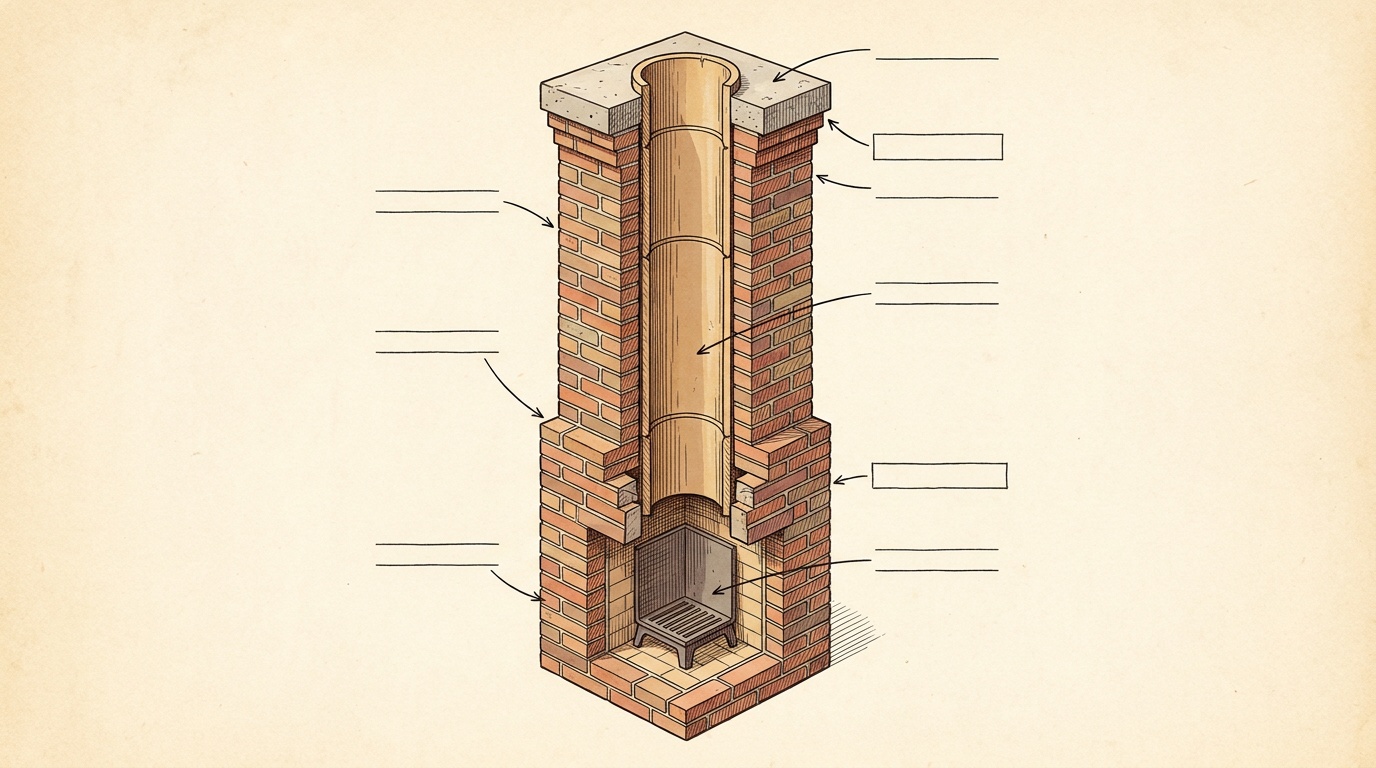
A chimney liner is the protective channel that runs the full height of the chimney, from the smoke chamber to the top of the stack. It is the surface that combustion byproducts actually touch. The brick and mortar around it are structure; the liner is containment.
It does three jobs at once. It keeps intense heat away from the wood framing that surrounds the chimney. It protects the masonry from acidic combustion byproducts that would otherwise eat mortar joints from within. And it gives the smoke a smooth, correctly sized path upward, which is what produces a reliable draft.
Liners are made from clay tile, stainless steel, or a cast-in-place masonry mix, and each behaves differently as it ages. We cover how the whole system works in more detail in our guide to how a chimney flue actually works. This article is about what happens when the liner stops doing its job.
Why a Failed Liner Is a Safety Problem
When a liner cracks, separates, or crumbles, the sealed path stops being sealed. Three things follow.
Heat reaches combustible material. A masonry chimney passes through floors, ceilings, and roof framing. The liner is what keeps flue temperatures away from that wood. A gap in the liner puts heat where it was never meant to go, and the wood does not have to reach open flame to char and eventually ignite.
Combustion gases escape the flue. Carbon monoxide is colorless and odorless, and a compromised liner can allow it to seep through masonry into living space rather than exiting above the roofline. The Centers for Disease Control and Prevention lists heating appliances and blocked or damaged chimneys among the common household sources of carbon monoxide exposure.
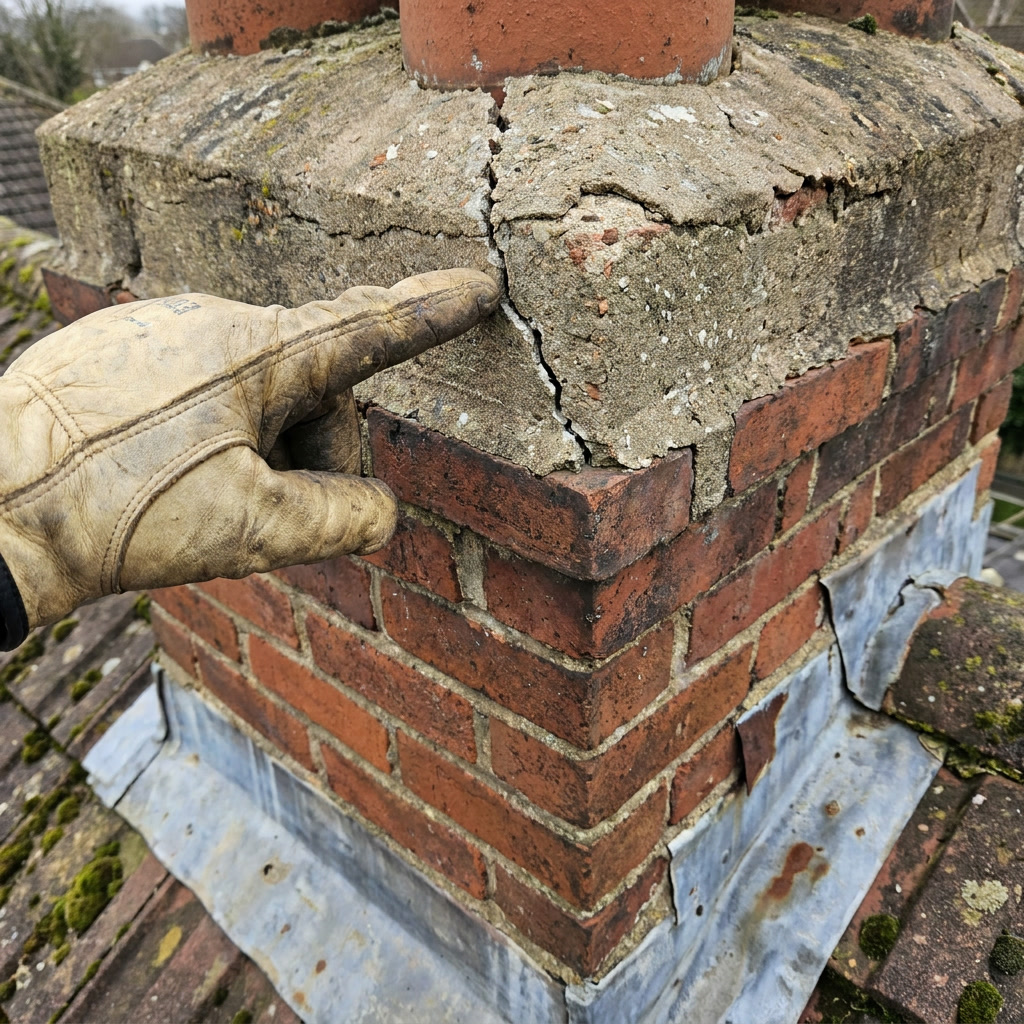
The chimney starts destroying itself. Once acidic byproducts and moisture reach the masonry directly, mortar joints soften and brick begins to spall. A liner problem left alone long enough stops being a liner problem and becomes a structural one.
This is why the National Fire Protection Association treats liner condition as a core safety item rather than a maintenance preference, and why a certified sweep will not sign off on a system with a known liner breach.
Signs Your Chimney Liner Has Failed
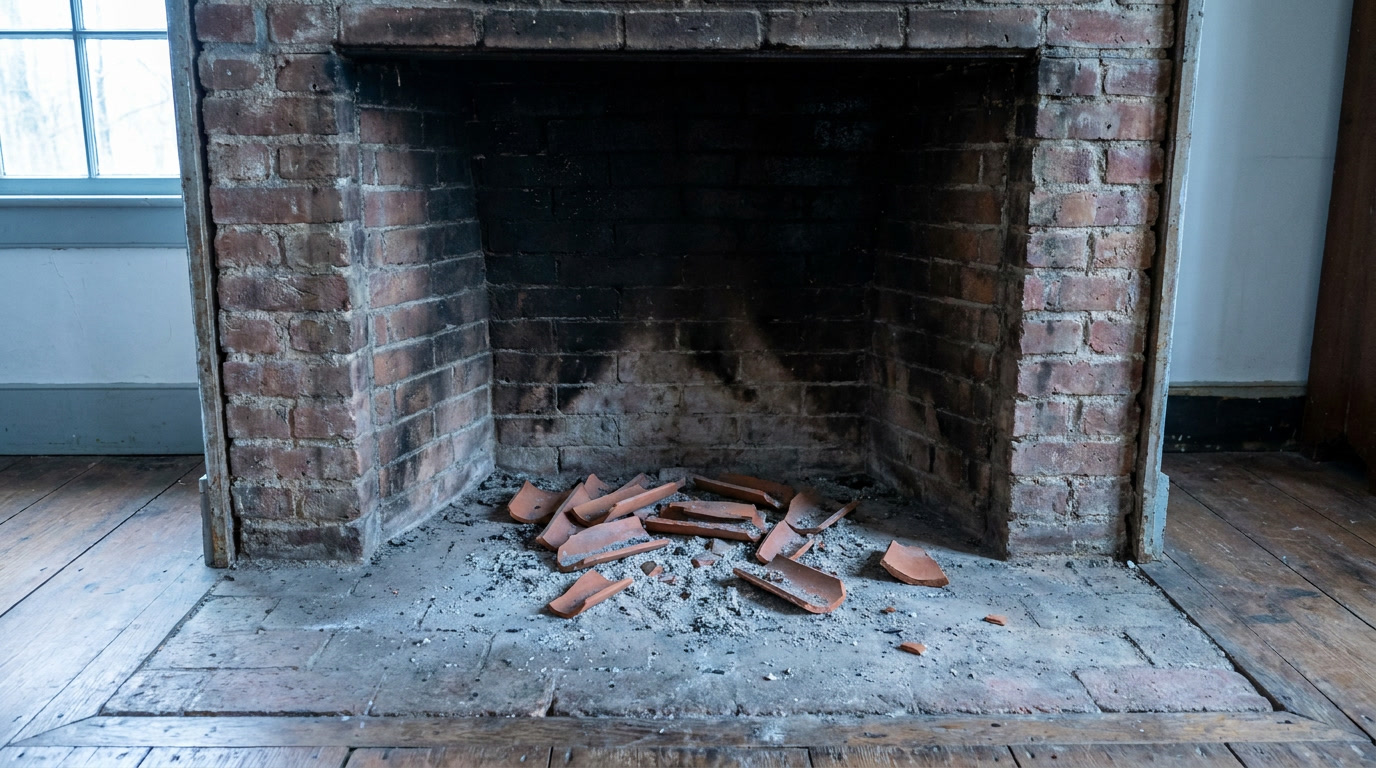
Tile Fragments in the Firebox
Liner damage happens out of sight, but it leaves evidence where you can see it. These are the signs worth acting on.
Tile Fragments in the Firebox
Thin, curved pieces of clay in the bottom of the firebox — sometimes described as looking like broken pottery or flakes of shale — are the clearest single sign of clay tile liner failure. The industry term is shaling. Those fragments are pieces of the liner itself, and they arrive in the firebox because the tile above has cracked and started shedding.
If you are sweeping out anything that looks like clay rather than soot or ash, stop using the fireplace and have the flue scoped before the next fire.
Smoke Entering the Room
A liner that has cracked or separated changes the shape of the channel the smoke is trying to climb. The draft weakens, and smoke that should be leaving through the top starts looking for the easier path — which is back into the room.
Poor draft has other causes too, from a closed damper to a blocked cap, so smoke alone does not confirm a liner problem. It does confirm that something in the flue path has changed.
White Staining on the Exterior Brick
Chalky white deposits on the outside of the chimney — efflorescence — mean moisture is moving through the masonry and carrying mineral salts to the surface. On its own it points to a water problem; combined with a liner that is no longer sealing, it often means moisture and combustion byproducts have been reaching the brick directly for some time. Our guide on how chimney leaks start from the inside out covers the water side of this in detail.
Strong Odors From the Fireplace
A sharp or acrid smell coming from an unused fireplace, especially in humid weather, suggests that byproducts have soaked into surfaces they should never have reached. A sealed liner keeps residue on a surface that can be swept clean. A porous, damaged one lets it into the masonry, where it stays.
Visible Cracks or Gaps at the Top of the Flue
From the roof, the top course of liner tile is sometimes visible. Cracks, missing chunks, or a visible gap between tile sections are worth reporting to a technician even if the fireplace seems to work normally. What is visible at the top is frequently the least damaged section, because the worst thermal stress happens lower down.
Any Fireplace Use After a Chimney Fire
A chimney fire subjects clay tile to rapid, extreme heat, and thermal shock cracks tile even when the fire was small enough that nobody realized it happened. Rumbling sounds, a strong burning odor, or dense smoke from the top of the chimney are all indications that one may have occurred. After any suspected chimney fire, the flue should be inspected before the next use — no exceptions.
Several of these overlap with other chimney defects. For the wider picture, see our overview of the warning signs a chimney needs attention.
What Causes Chimney Liners to Fail
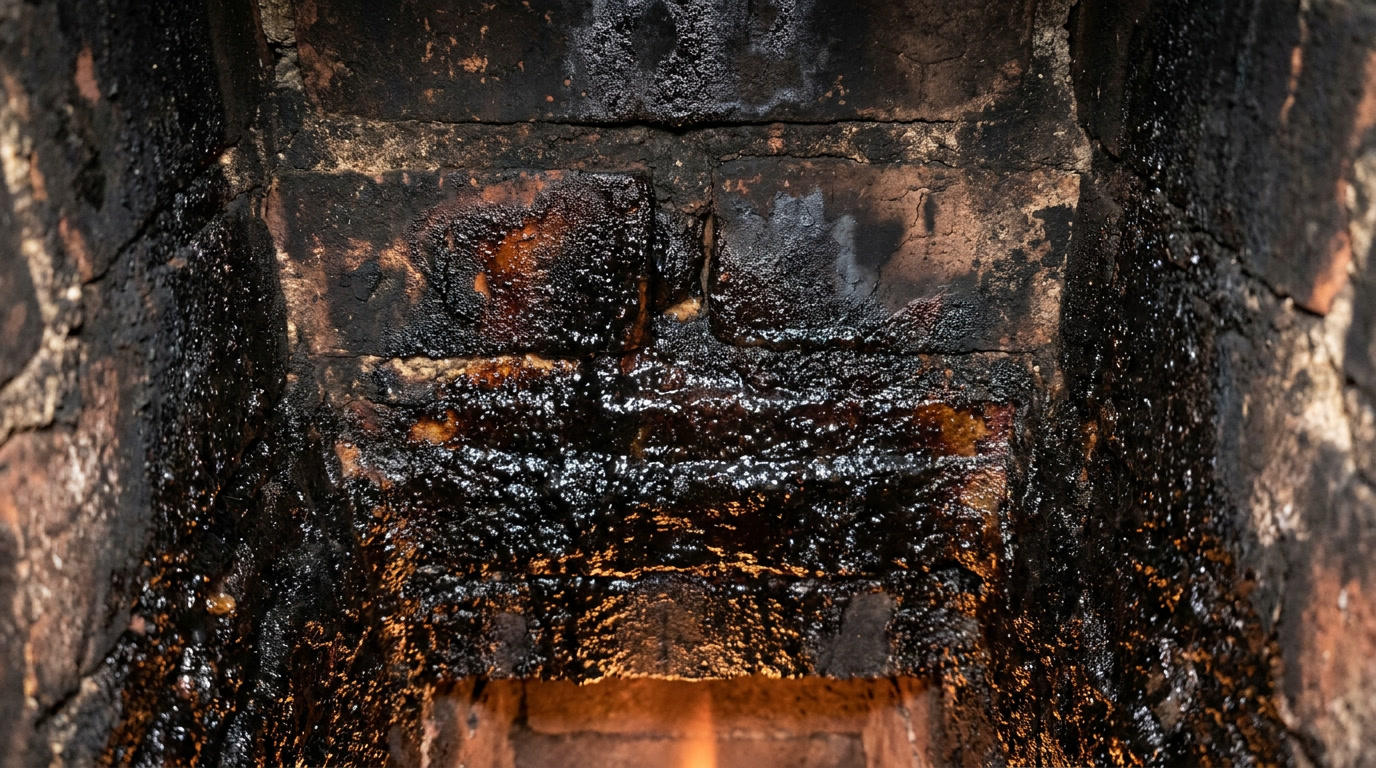
Liners rarely fail for one reason. Usually a first cause opens a small breach, and everything after that widens it.
The last one is worth dwelling on, because it is the most preventable item on the list. An open flue takes weather directly, and freeze-thaw cycles do the rest.
How Liner Damage Is Confirmed
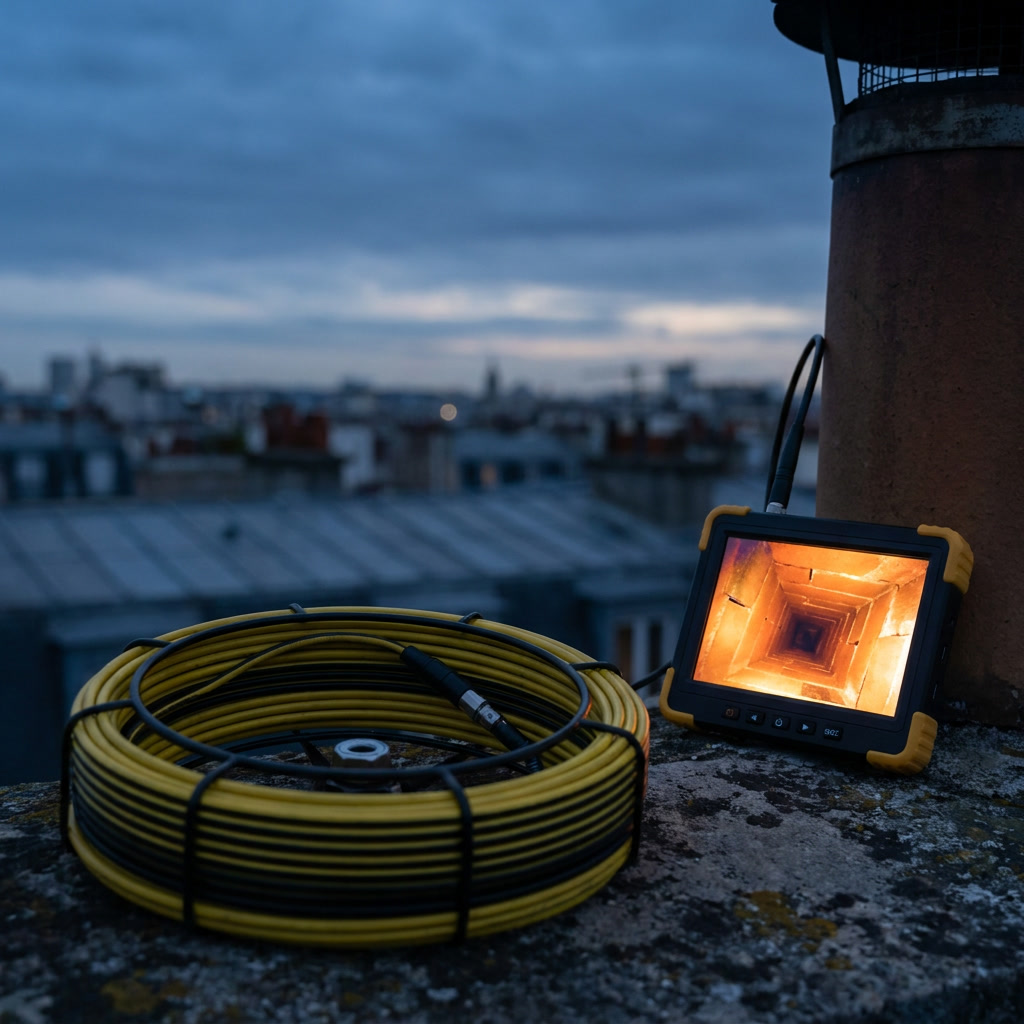
Liner condition cannot be judged from the firebox or the roof. Confirming it requires seeing the full interior surface, and that means a camera.
A visual inspection covers readily accessible parts of the chimney and appliance. It is appropriate for a system in continued service with no changes and no known problems. What it cannot do is show the condition of the liner along its full height.
A Level 2 inspection adds a video scan of the internal surfaces, which is the only way to document cracks, separated joints, gaps, or blockages that sit out of sight. It is standard practice before a property sale, after a chimney fire, and any time an appliance or fuel type changes.
At Brown Chimney a Level 2 camera inspection is a $149 add-on to a standard inspection, and it produces a video record rather than a verbal summary at the door. You can price a Level 2 inspection for your chimney in about 30 seconds. If you have seen tile fragments in the firebox or suspect a chimney fire, this is the step that answers the question.
Repair, Reline, or Rebuild?
Once the scan is done, the finding drives the decision — not the homeowner's budget, and not the technician's preference.
Relining is not a patch. A damaged clay tile liner cannot be repaired section by section in the way brickwork can, because the sections are inaccessible and the failure is rarely limited to the piece you can see. Where the liner has genuinely failed, the answer is a new one.
Relining is quoted after the scan rather than online, because the price depends on flue height, dimensions, access, and the appliance it will serve. Any structural masonry found alongside it falls under our chimney repair work and is quoted as a separate line item, so you can see what belongs to which job.
How to Make a Liner Last
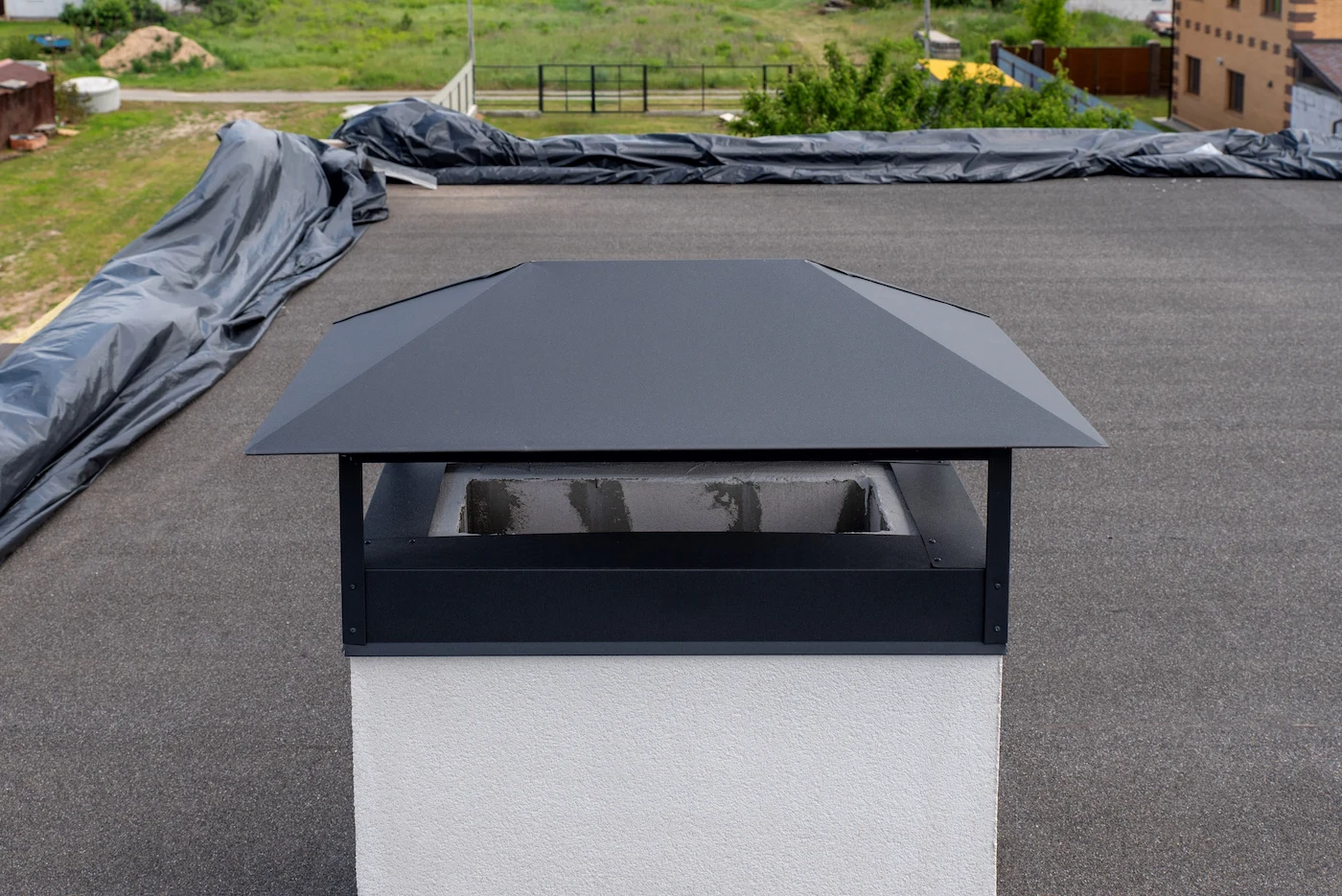
Most liner failures we scope were preventable, and almost all of them trace back to water or to a fire that nobody knew about. The maintenance that prevents both is unglamorous and cheap by comparison.
Booking our chimney inspection service once a year is what turns a future reline into a repair, and a repair into nothing at all.
Final Thoughts
A chimney liner is the one component of the system that is both critical to safety and impossible to assess from the ground. It fails quietly, and the signs it does leave — clay fragments in the firebox, smoke in the room, white staining on brick, a smell that will not go away — are easy to explain away as something minor.
They are worth taking seriously. A liner that has cracked is not a repair that can wait for next season, because every fire after the breach makes the situation worse and puts heat where the chimney was never designed to send it.
If you have seen any of the signs in this guide, or if it has been more than a year since anyone looked inside your flue, a camera inspection settles the question in a single visit — with a video record of what is actually there.
Frequently Asked Questions
How do I know if my chimney liner is bad?
The most reliable sign visible to a homeowner is thin pieces of clay tile in the firebox, known as shaling. Smoke entering the room, white staining on exterior brick, and persistent fireplace odors are also common indicators. Confirming liner condition requires a camera inspection of the flue interior.
Can a cracked chimney liner be repaired?
It depends on the extent. Isolated deterioration near the top of the flue can sometimes be addressed with targeted repair. Where clay tile has cracked or separated through the flue, relining is the standard solution, because the damaged sections are inaccessible and the failure is rarely limited to one visible area.
Is it safe to use a fireplace with a damaged liner?
No. A compromised liner can allow heat to reach surrounding framing and combustion gases, including carbon monoxide, to enter living space. A fireplace with a known liner breach should not be used until the flue has been inspected and the issue resolved.
How long does a chimney liner last?
Lifespan depends on the material, how the chimney is used, and how well it has been protected from water. Clay tile liners in well-maintained chimneys commonly last for decades, while a single chimney fire or years of water intrusion can end that lifespan early. Annual inspection is what tracks the condition over time.
What is a Level 2 chimney inspection?
A Level 2 inspection adds a video scan of the flue's internal surfaces to a standard inspection, documenting cracks, gaps, and blockages that are not otherwise visible. It is standard before a property sale, after a chimney fire, and whenever the appliance or fuel type changes. At Brown Chimney it is a $149 add-on.
Do all chimneys need a liner?
Modern code requires masonry chimneys serving fireplaces and heating appliances to be lined. Some older chimneys were built unlined or have liners that no longer meet current standards, which is one reason inspection matters on older housing stock.




RELATED ARTICLS
Schedule an Inspection Now
with expert chimney care.