Chimney Liner & Relining in Burlington

The liner is not chosen from a catalogue. It is chosen by whatever is connected downstairs

★

5.0 · 53 Burlington reviews

✓

CSIA certified

✓

Installed to code

✓

1-year workmanship warranty

Number section icon
Pricing, before you commit

Our prices are published, not hidden

Want to know the cost before anyone visits your Burlington home? Our chimney liner pricing page works out an estimate from your appliance, your chimney's height and roof access. No email, no callback.

faq svg
The craft, done properly
CHIMNEY LINER & RELINING IN BURLINGTON, MA

Start with the appliance, because the appliance decides everything else. Solid fuel gets 316L stainless steel and nothing else. Gas appliances may use aluminum. And the diameter is set by what is being vented — a flue that is too large for its appliance never reaches temperature, never establishes a proper draft, and lets moisture condense inside itself instead of carrying it out.

That is not an abstract concern in a town where gas heating and oil heating are both common. A chimney built around one appliance and now serving a different one is a real situation, and it is the reason we look at what is connected in the basement before discussing what goes up the flue. Not every case needs a liner. The ones that do are identifiable rather than assumed.

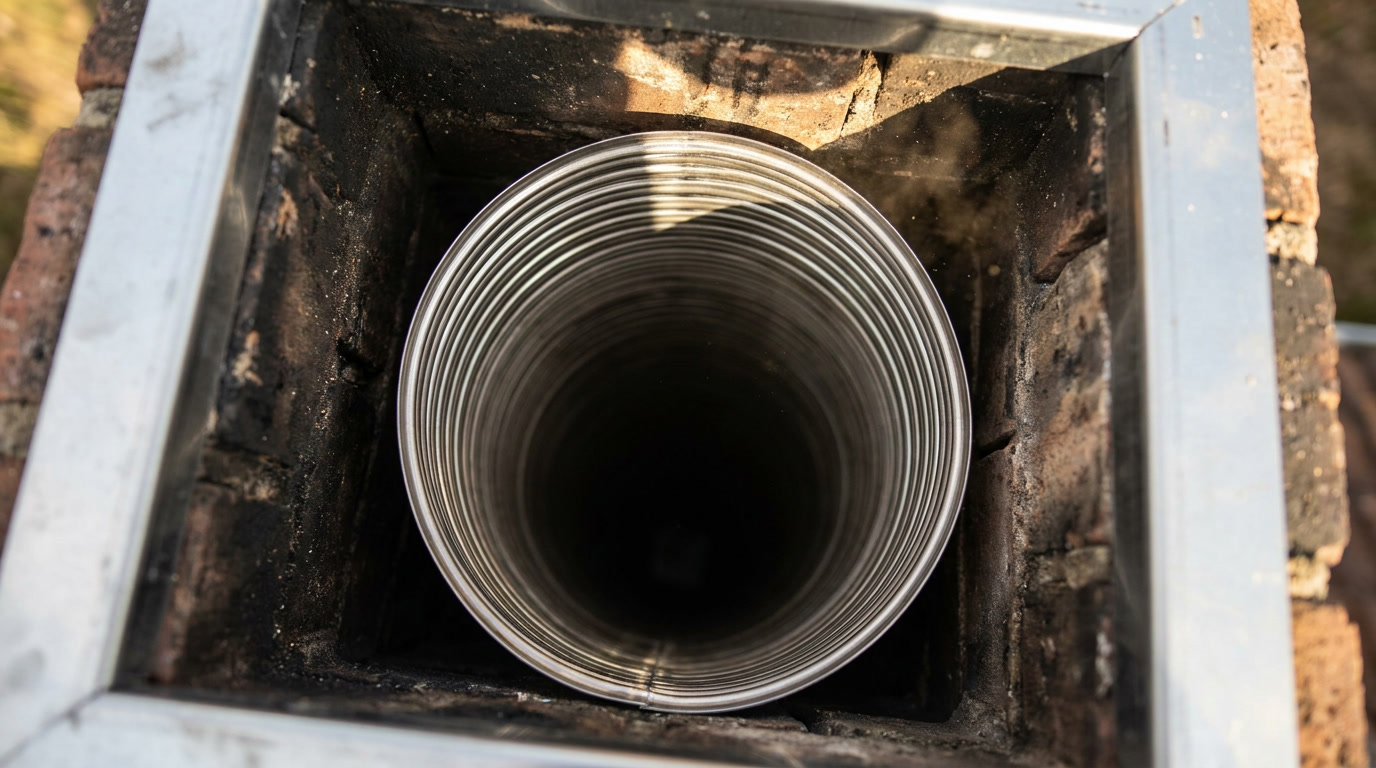
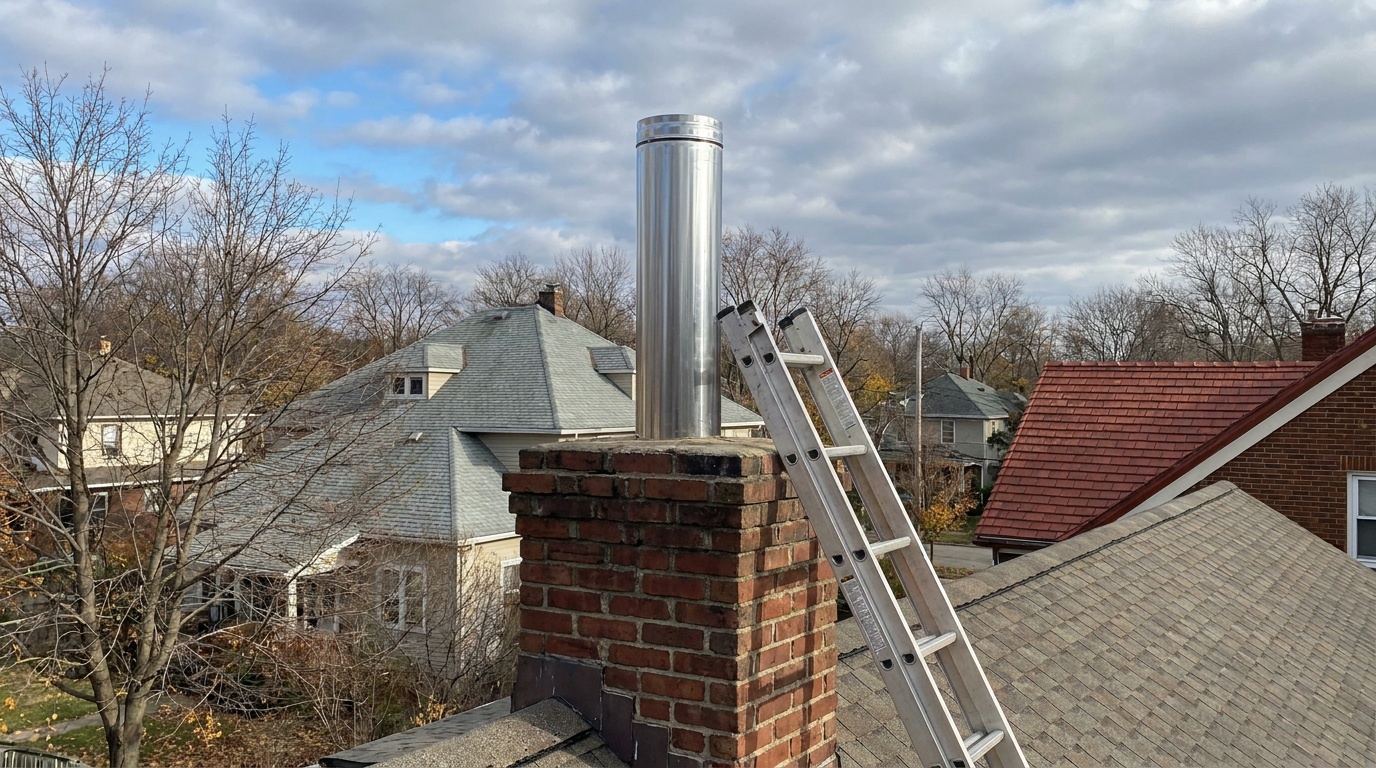
The liner itself is the sleeve carrying combustion gases out while keeping heat off the surrounding masonry and framing. Installation includes the top plate, cap, appliance connector, and thimble, installed to code. Where the flue tile is damaged but the chimney is sound, a cerfractory coating applied top to bottom is the alternative worth knowing about. A permit is required for most liner installations and appears as its own line. Standards in full on our liner and relining service page; pricing is on the liner cost calculator.
stack icon
The Work

Nothing about a failing liner reaches the room.

There is no smell, no smoke, and no sound. A cracked flue tile does not behave like a blockage. It simply stops separating hot gas from the masonry and the framing behind it, while everything at the hearth continues to look and feel entirely normal.

Which is why this is one of the few services that cannot be quoted honestly without seeing inside. A camera run is the only reliable evidence, and it is the standard requirement after a chimney fire, after a change of fuel, and during a property sale. It also comes up whenever a new insert or stove goes in, because the appliance needs a flue sized to it rather than whichever one the house happens to have.

Liner work runs from both Massachusetts offices — Wellesley takes the towns to the south, and the state page covers the rest. The local service list is on the Burlington page.
document icon
When to book

Signs a Burlington chimney needs relining.

Almost none of this is visible from inside the house, which is precisely the difficulty. Two of the six are events rather than symptoms.

01

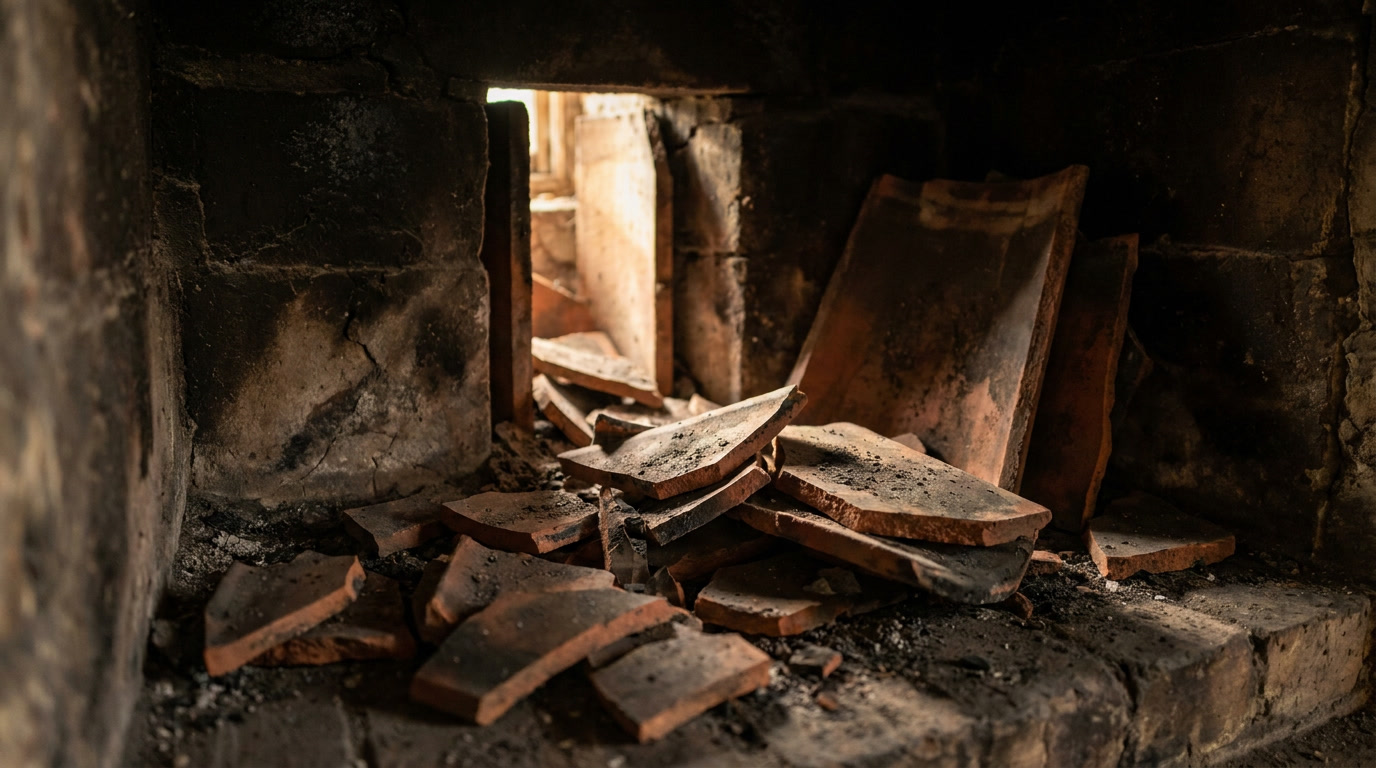
Pieces of clay tile found in the firebox or on the smoke shelf

02

A camera inspection showed cracked or displaced flue tiles

03

There has been a chimney fire, however minor

04

You are changing fuel type or replacing a heating appliance

05

White staining or dampness on the chimney breast indoors

06

The chimney has never been lined at all

‍

Number four is the one that gets skipped. Replacing a heating appliance is treated as a boiler job, and the chimney it vents into rarely gets a second thought — even though what the flue now has to carry has changed completely.

"

Ay, did a great job installing a liner from our water heater to the chimney and repairing chimney flashing. Very friendly and professional.

Robbie Hay

Burlington Client
cup icon
The Brown Chimney Standard · Burlington

Oil, gas, and what the flue was built for.

Both fuels are common here
Plenty of Burlington homes heat with gas and plenty still heat with oil. That matters more than it sounds: the appliance decides what the flue has to be, and a liner that suits one is not automatically right for the other. We establish what is venting through your chimney before quoting anything.
Sixty-year-old liners are not unusual
Some homes from the town's post-war expansion still have their original clay flue liners. Age alone is not a fault, and we will not tell you it is — but it is worth knowing what is up there rather than assuming.
1-year workmanship warranty
The labor on our repairs and installations is covered for a full year — in writing, not in promises.
Price fixed before we start
Measured on site, quoted in writing, approved by you — then the work begins. Never the other way around.

Liner match

What liner does your flue actually need?

The liner material follows what you burn: stainless steel for wood, aluminum for gas appliances only. Tell us the appliance, what the flue looks like inside and how tall the chimney is, and see what happens to combustion gases in a failed flue, which liner fits, and the price lines from our price book.

WALL FRAMINGFRAMINGAPPLIANCE / FIREBOX
  • Combustion gases reaching masonry and framing through the failed flue
  • Stainless liner, continuous over the full flue height

Chimney height: 25 ftStatus: Gases reaching masonry and framing

What will the flue serve?

What is inside the flue right now?

Has any of this happened?

Where does the chimney run?

Chimney height, firebox to top

25 ft

Stainless steel liner

Stainless steel, full flue height

A wood-burning system needs a stainless steel liner rated for wood. It runs the full height of the flue with a top plate, liner cap and the connection to your fireplace, which keeps heat and combustion byproducts off the masonry and the framing around it.

Liner materialStainless steelRated for wood-burning appliances.
ScopeFull scopeTile break-out, smoke chamber work or insulation may be part of the job.
Warranty1 yearWorkmanship warranty on labor; the liner carries the manufacturer’s warranty.
  • Level 2 inspection with cameraIf the flue has not been documented with a camera yet. Credited toward repair work booked within 30 days.$350
  • Stainless steel liner, 25 ft$1,750 plus $125 per foot of chimney height, minimum $3,500. Offsets, extra connections or an unusual chimney are priced on site; hard access adds $500.$4,875
  • Clay tile break-out, if neededTiles removed from inside the flue to make room for the liner.$800 – $2,500
  • Smoke chamber smoothing, often done with a new linerRough smoke chamber walls coated smooth with high-heat mortar.$1,750 – $2,750
  • Building permit, where the town requires oneApplication, filing and the town inspection.$1,200

There may be an alternative: HeatShield

Where the clay tiles are cracked but sound enough to coat, a ceramic flue coating can restore the flue instead of relining it: $1,500 plus $125 per foot of flue height, minimum $3,500. At 25 ft that is $4,625. The technician confirms on site whether your flue can be coated or needs a new liner.

Liner prices from our price book

  • Stainless steel liner (wood)$1,750 + $125 per ft, min. $3,500
  • Aluminum liner (gas only)$2,500 · $3,500 · $4,500
  • Old liner removal$700 – $1,900
  • Liner insulation$800 – $1,600
  • HeatShield flue coating$1,500 + $125 per ft, min. $3,500
  • Level 2 inspection with camera$350

Aluminum is $2,500 up to 20 ft, $3,500 for 20–30 ft and $4,500 over 30 ft. Stainless offsets, extra connections or an unusual chimney are priced on site; hard access adds $500. Final prices are set on site after measurement and confirmed with you before work begins. Repairs and installations carry a 1-year workmanship warranty on labor.

stack icon
What to expect

What happens during a Burlington relining.

Nothing is priced until the flue has been seen on camera and the appliance confirmed. Once material and diameter are settled, most installations take one to two days. Where old clay has to come out first, or the smoke chamber needs attention, that is set out in writing before booking rather than discovered on the day. Permits go through the Building Department at 25 Center Street.

01

Assessing the existing flue

The flue is assessed before anything is quoted. Where the interior needs to be seen rather than assumed, a camera inspection is offered as its own line — you'll know the cost before we run it.

02

Sizing & material selection

The liner is sized to your appliance and flue. Wood-burning systems get 316L stainless steel only; gas appliances can take aluminum. Code sets that rule, not preference or price.

03

Old liner removal

Where a failed liner is already in place, it comes out first — top plate, cap, and full extraction — and the bare flue is re-inspected before anything new goes down.

04

New liner installation

The liner runs the full flue height with top plate, cap, appliance connector, and thimble, installed to code. On exterior chimneys and cold climates we'll offer an insulation wrap and price it separately.

05

Connection & walkthrough

The appliance connection is completed and the finished installation walked through with you, with the 1-year workmanship warranty on all labor performed.

stack icon
For transparency

What relining does not cover.

The crown and the cap. The technician is at the top of the chimney for this work and photographs both, but any repair to them is quoted on its own line.

Masonry repair to the structure around the flue. Where the chimney itself has failed, that is separate work and occasionally has to happen first.

The appliance. Relining sizes a flue to whatever it serves; supplying and fitting the appliance is a different service with a different price.

stack icon
FAQs

Common questions about chimney relining in Burlington

1 icon

How do we know if ours needs it?

A camera inspection, and realistically nothing else. Liners fail without producing any symptom in the room, so the only reliable evidence is a recorded run of the full interior. It is priced as its own line, and the fee is credited toward repair work booked within 30 days.
Faq Number

We replaced our heating system a few years ago. Does that affect the chimney?

It can, and it is worth checking. A flue sized around one appliance is not automatically right for its replacement, and where the new appliance runs cooler the flue may never warm enough to carry moisture out. It is a straightforward thing to verify and an expensive thing to ignore.
3 icon

What material will ours be?

Whatever the appliance requires. Solid fuel takes 316L stainless with no exceptions. Gas appliances may use aluminum. Diameter is set by the appliance too, which is why the sizing conversation starts in the basement rather than on the roof.
4 icon

Is there an alternative to a metal liner?

Sometimes. Where the tile is damaged but the chimney is structurally sound, a cerfractory coating applied from top to bottom can restore the flue without a metal sleeve. It suits some chimneys and not others, and the camera inspection is what decides.
5 icon

Do we need a permit?

For most liner installations, yes. It is filed with the Building Department at 25 Center Street under the 10th Edition of the state building code, and it appears on your estimate as its own line rather than being folded into the price of the work.
stack icon
A safer hearth — for 2026

Sized to what it serves.

Every Brown Chimney liner is specified against the appliance it vents, installed to code, and quoted only after the flue has been seen on camera. 1-year workmanship warranty on all labor. Call 781-547-7784.