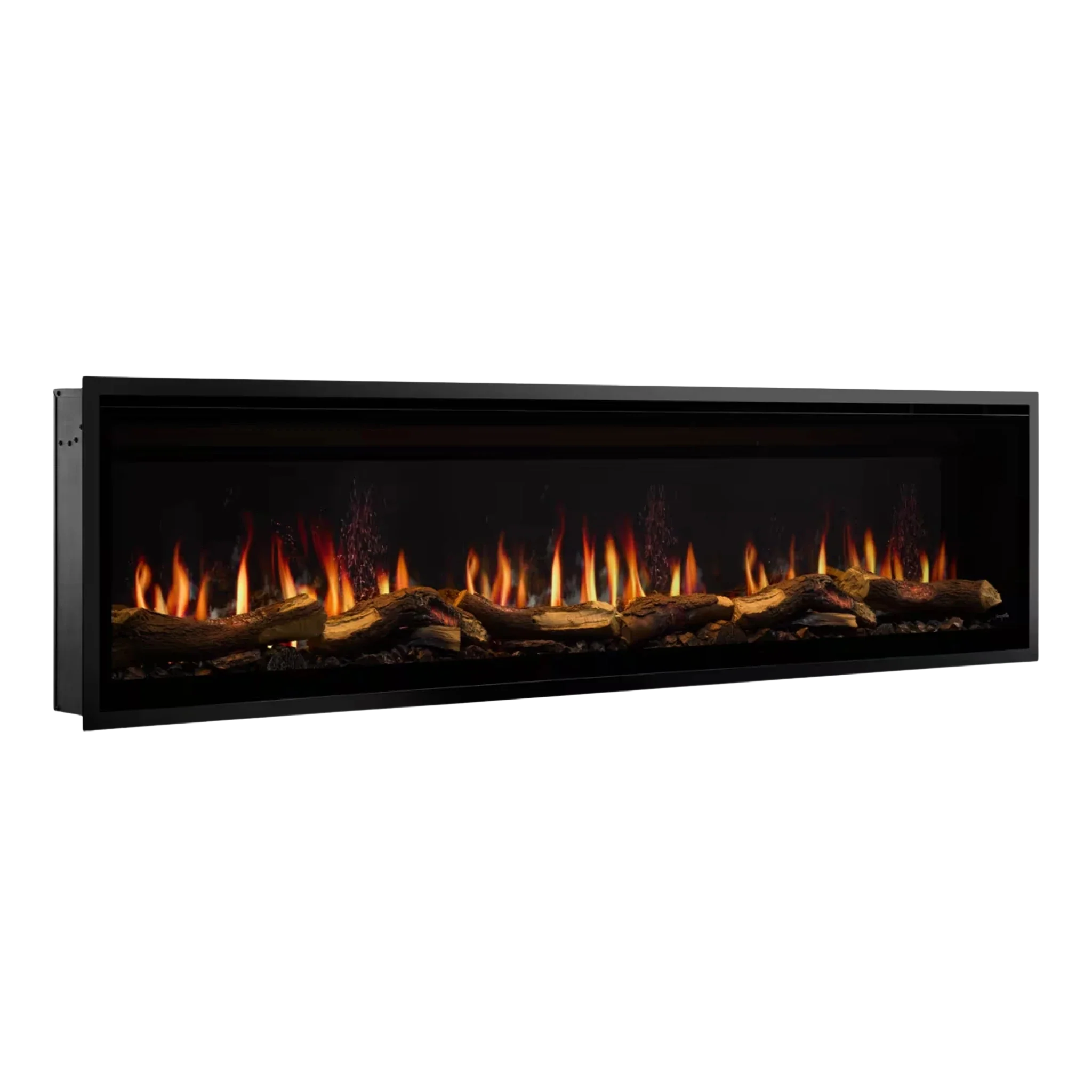
SimpliFire
Allusion Edge Linear Electric Fireplace
A slim linear electric fireplace with digital flame effects, offered in four widths for recessed, wall-mounted or build-out installation.
Explore product
Collection
Electric fireplaces create flame effect and optional supplemental heat without a chimney, flue or gas line. They suit apartments, finished basements, bedrooms and media walls where venting would be impractical.
Because there is no combustion, the main planning questions are recess depth, electrical supply and the finish material around the opening.
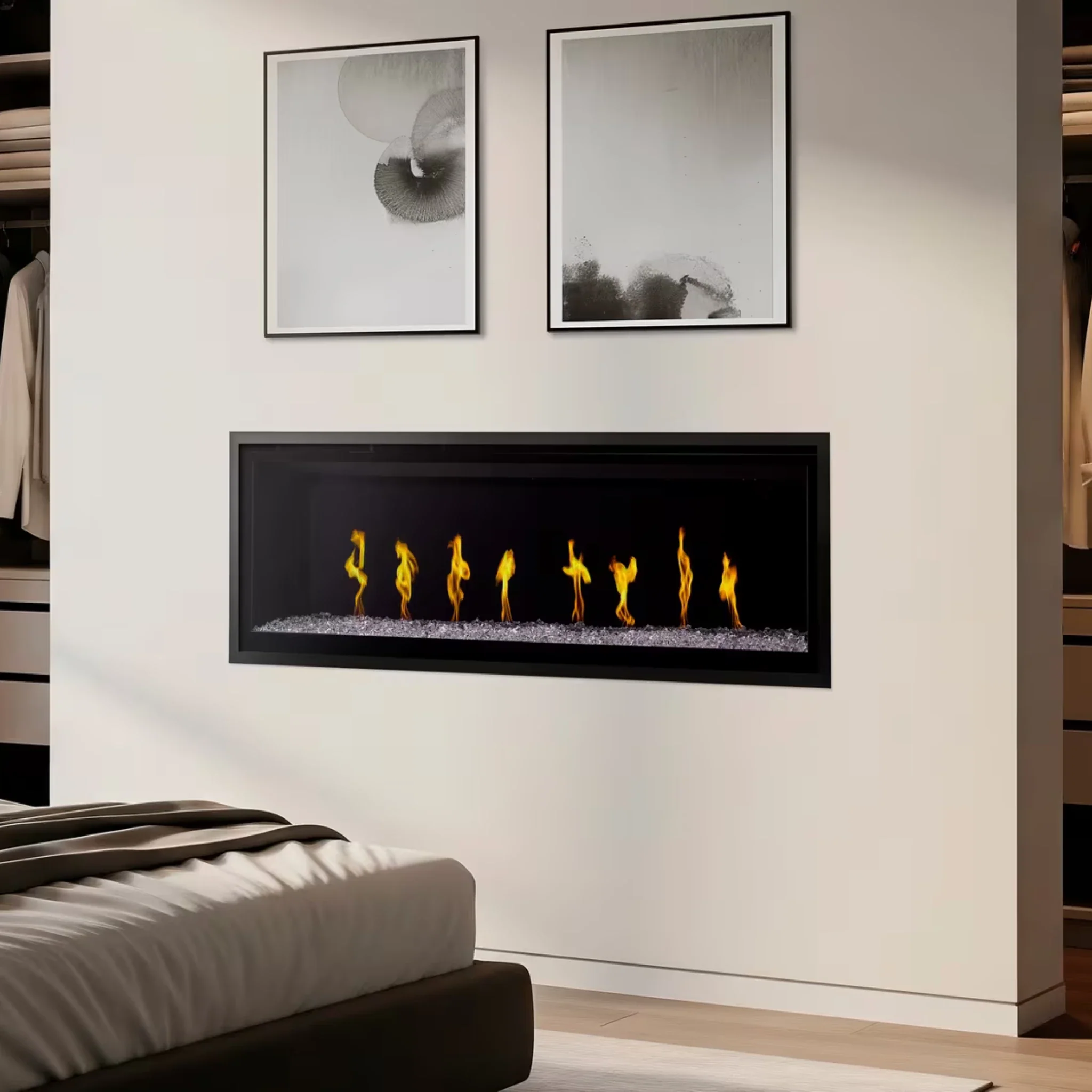
Linear electric models are usually sized by width. Confirm the framed opening and wall depth before choosing a size, since the finished surround is built around the unit.
Many electric units run flame-only, so they can be used year round. Heat output is modest compared with gas or wood, and is best treated as supplemental.
Check the manufacturer's electrical requirements for the specific model and have an electrician confirm the circuit before the surround is closed up.
Brown Chimney can assess what a fireplace would need in your home — the opening, the chimney or venting route, and what work is involved. Service availability depends on your location.
No. Electric models produce no combustion by-products, so no flue or venting is required. Follow the manufacturer's clearance and electrical instructions for the specific model.
Most current models include a flame-only mode so the fire effect can run separately from the heater. Check the specification for the model you are considering.