Chimney Liner & Relining in Wellesley
A century-old flue was lined with clay, and clay cracks where nobody can see it
★
4.9 · 75 Wellesley reviews
✓
CSIA & NFPA certified
✓
$49 fee credits toward repairs
✓
Same-day PDF report

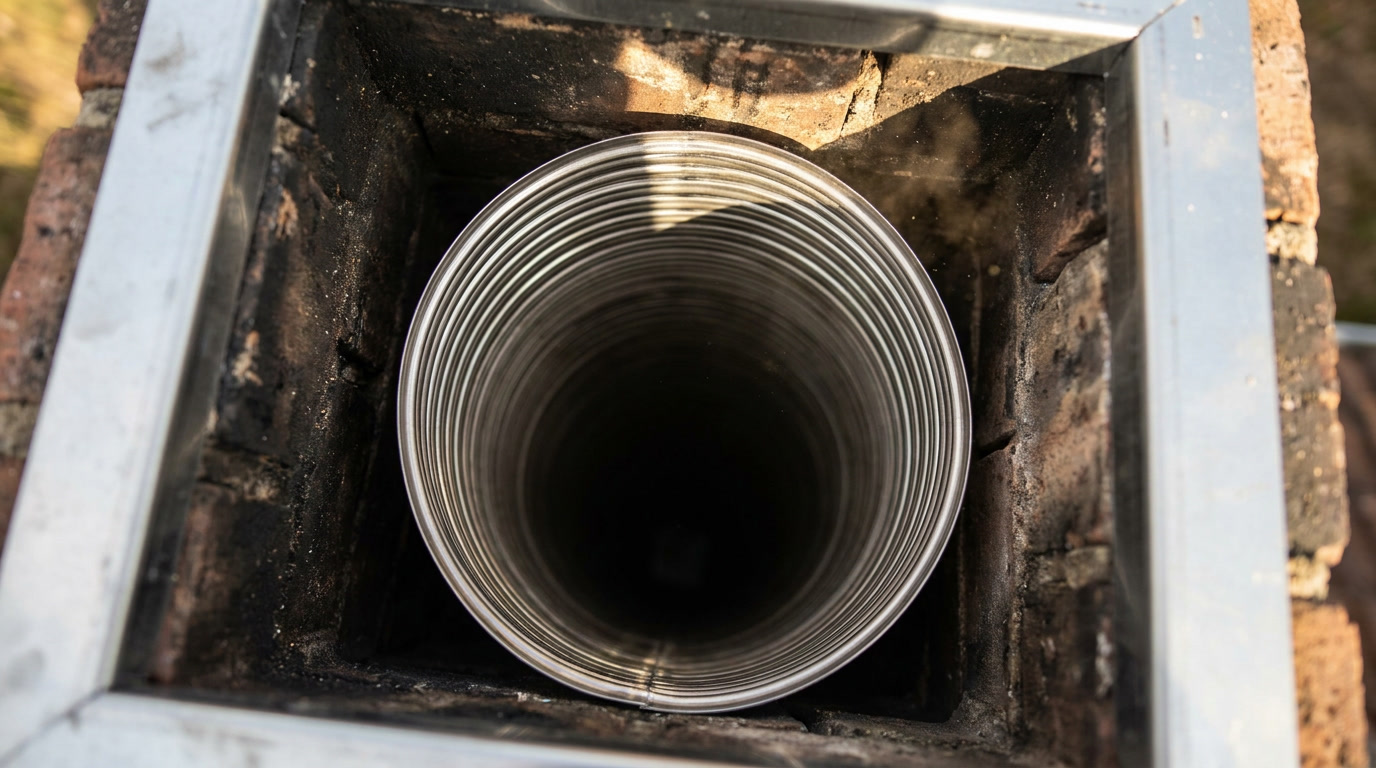
A century-old flue was lined with clay, and clay cracks where nobody can see it
★
4.9 · 75 Wellesley reviews
✓
CSIA & NFPA certified
✓
$49 fee credits toward repairs
✓
Same-day PDF report

Relining is quoted after a camera run, not before. A $149 Level 2 inspection records the full interior and shows you what is actually there — and the fee credits toward the work.
Live
chimney-liner-relining
Quoted after flue evaluation
Inspection (credited)
−$49
Typical job
Sized to your appliance
Final price quoted in writing before any work.

The liner is the sleeve inside the chimney that carries combustion gases out and keeps heat away from the surrounding masonry and framing. In a pre-war Wellesley house it is almost always clay tile, laid in sections when the chimney was built. Clay is durable and it is also brittle, and after ninety years of heating and cooling the joints between sections open and the tiles crack.
Material is decided by the appliance, not by preference. Wood-burning gets 316L stainless steel and nothing else. Gas appliances may use aluminum. A liner is sized to the appliance it serves — an oversized flue never gets warm enough to draft properly, and an undersized one cannot clear the gases at all. All of it is code-compliant under NFPA 211, and installation includes the top plate, cap, appliance connector, and thimble.
Where the flue tile is damaged but the chimney is otherwise sound, there is a second option worth knowing about: a cerfractory coating applied top to bottom that restores the flue without a metal liner. Which one suits you comes out of the camera inspection. A permit is required for most liner installations and is filed with the Wellesley Building Department; it is $1,195 and appears as its own line. Full standards on our liner and relining service page.
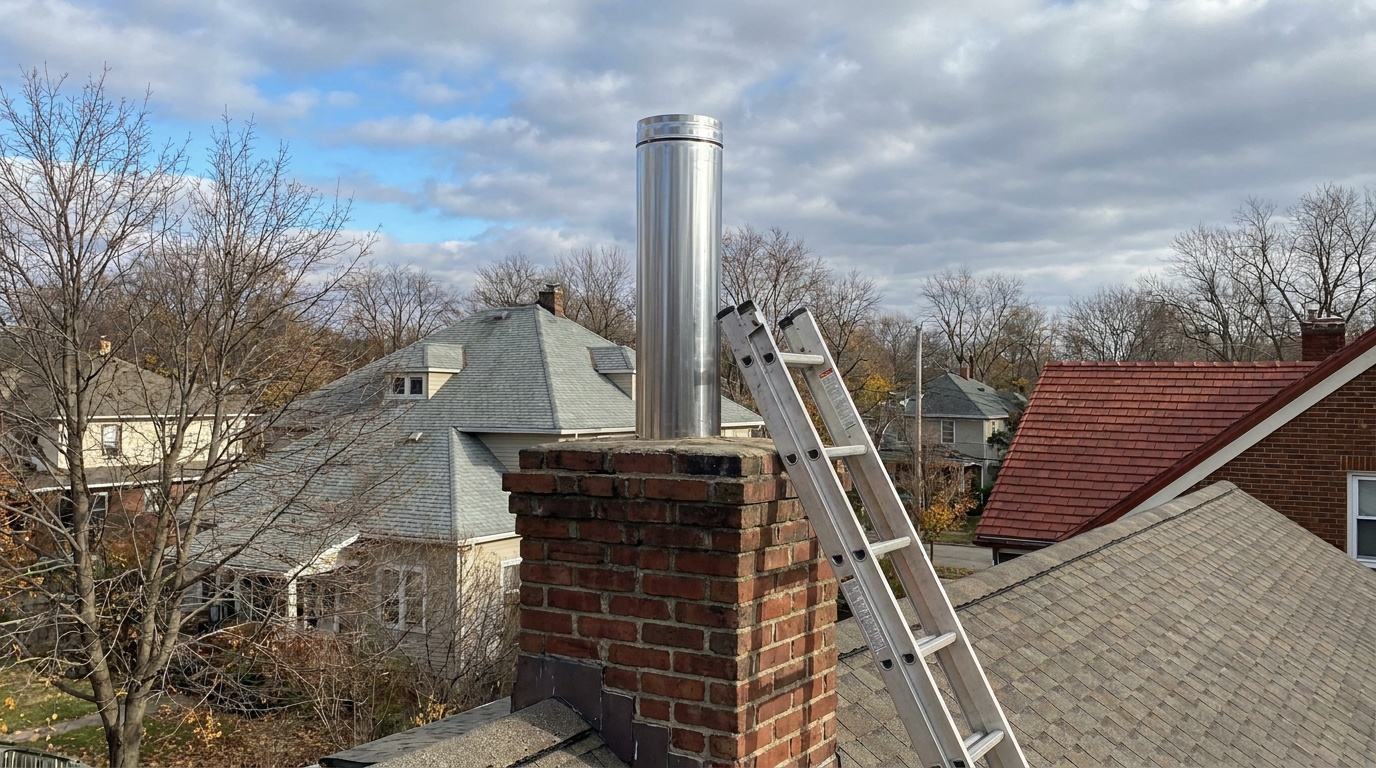
316L stainless liner run top to bottom and connected at the appliance

There is no smell, no smoke, and no sign in the room. A cracked clay tile does not announce itself the way a blocked flue does. It simply stops separating hot gas from the masonry and the framing behind it, and everything continues to look and feel normal from the hearth.
That is why this is one of the few services that cannot honestly be quoted from the ground. A camera run is the only way to see the full interior, and it is the standard requirement after a chimney fire, after a fuel change, and in a real-estate transaction. In Wellesley the third of those comes up constantly — houses here change hands often, and a buyer's inspector will ask about the flue. Relining also comes up with a new insert or stove, because the appliance needs a liner sized to it rather than the one the house happened to have.
Liner work runs from both Massachusetts offices — Burlington takes the northern towns, and the state page lists the full coverage. Everything we do here is on the Wellesley services page.
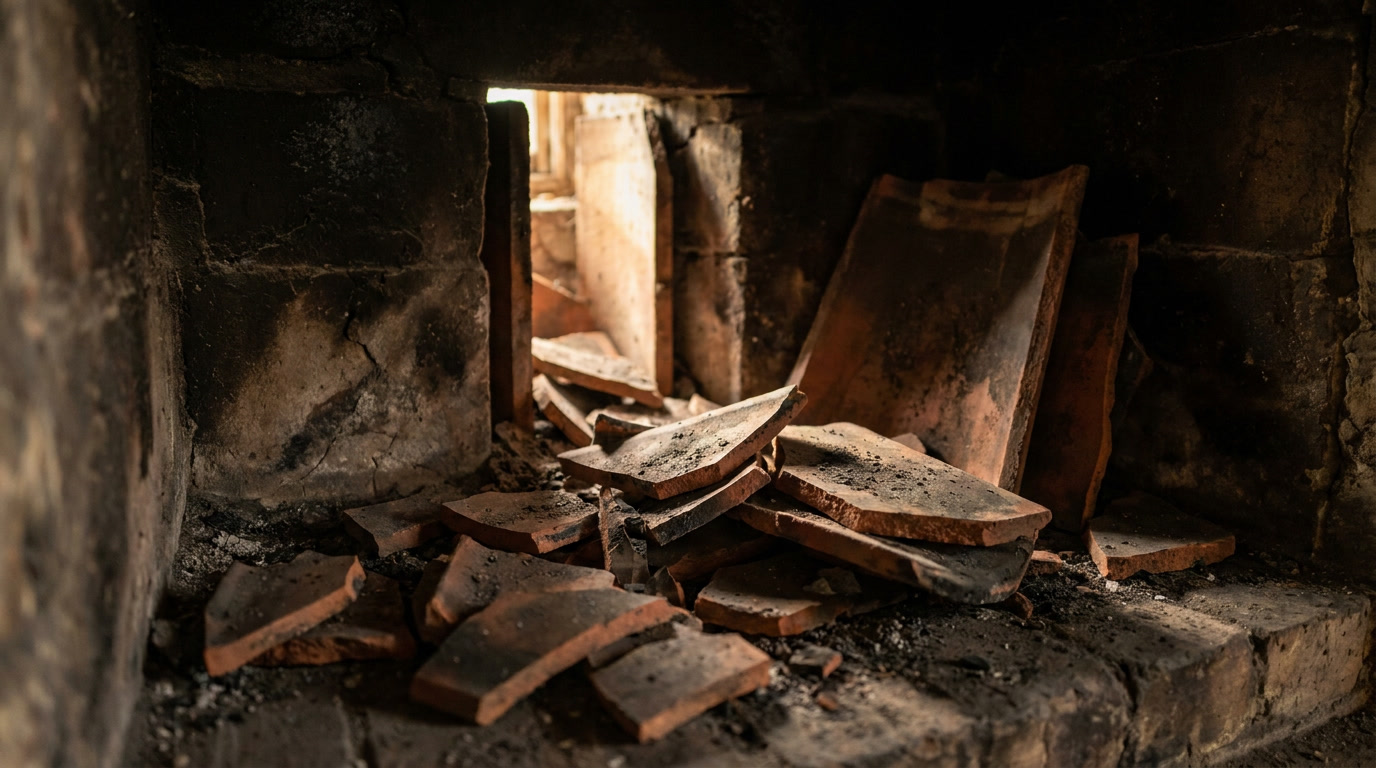

Almost none of these are visible from inside the house, which is the whole difficulty with this service.
The first one is the only sign most people ever get, and it is easy to mistake for ordinary debris. Fragments of terracotta in the firebox mean the tiles above have started to break up, and that is a camera inspection rather than a sweep.
"
A liner fails silently. There's no smell, no smoke, no sign in the room — right up until there is one. That's why we look before we guess.

Nothing is quoted until the flue has been seen on camera. Once the material and size are settled, most installations are one to two days. Where the old clay has to come out or the smoke chamber needs work first, the scope grows and that is set out in writing before booking rather than discovered on the day. The permit is filed with the Building Department at Town Hall on Washington Street.
01
The flue is assessed before anything is quoted. Where the interior needs to be seen rather than assumed, a camera inspection is offered as its own line — you'll know the cost before we run it.
.jpg)
02
The liner is sized to your appliance and flue. Wood-burning systems get 316L stainless steel only; gas appliances can take aluminum. NFPA 211 sets that rule, not preference or price.
03
Where a failed liner is already in place, it comes out first — top plate, cap, and full extraction — and the bare flue is re-inspected before anything new goes down.
04
The liner runs the full flue height with top plate, cap, appliance connector, and thimble, code-compliant per NFPA 211. On exterior chimneys and cold climates we'll offer an insulation wrap and price it separately.
05
The appliance connection is completed and the installation photographed for your report, with the 1-year workmanship warranty on all labor performed in writing.
The crown and the cap. The technician is at the top of the chimney for this work and will photograph both, but any repair to them is a separate line rather than an assumption.
Masonry repair to the chimney itself. Where the structure around the flue has failed, that is quoted on its own and sometimes has to happen first.
Appliance supply. Relining sizes the flue to an appliance; buying and installing the appliance is a different service with a different price.


Every Brown Chimney job in Wellesley is measured on site, priced in writing, and started only after you approve it. Structural labor carries a 1-year workmanship warranty. Call 781-547-7784 or book online.