Chimney Cap Installation in Burlington
The cheapest component on the chimney is the one keeping water out of all the others
★
5.0 · 53 Burlington reviews
✓
CSIA & NFPA certified
✓
1-year workmanship warranty
✓
Licensed · $2M insured

The cheapest component on the chimney is the one keeping water out of all the others
★
5.0 · 53 Burlington reviews
✓
CSIA & NFPA certified
✓
1-year workmanship warranty
✓
Licensed · $2M insured

A cap is the least expensive thing on the roof and the only one standing between an open flue and the weather. Price it in half a minute and see what the alternative costs.
Live
chimney-cap-installation
$195 – $2,500
Inspection (credited)
−$49
Typical job
$375 – $549
Final price quoted in writing before any work.

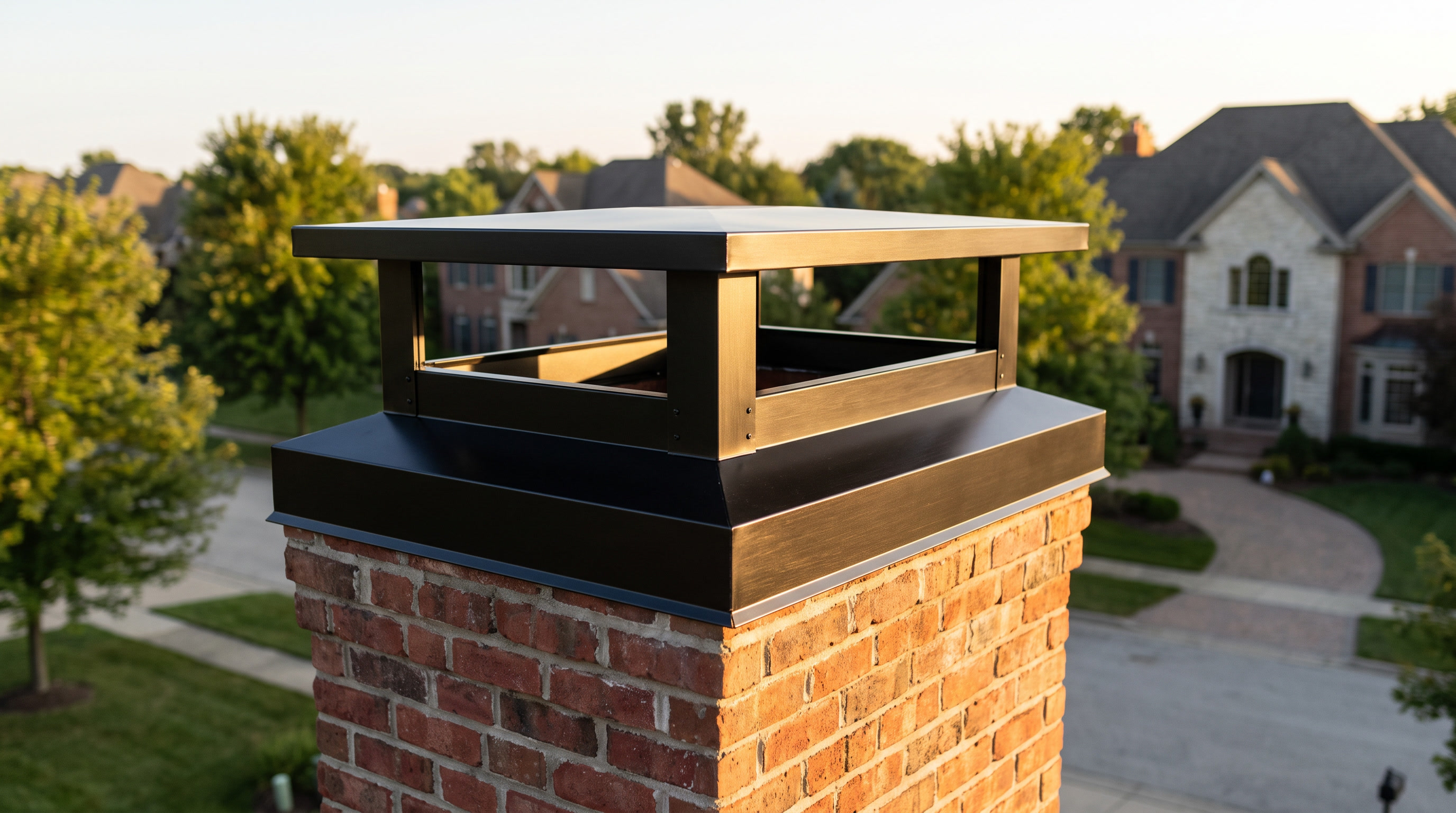
A cap is the cover over the top of the flue, and it does three jobs at once: it keeps rain from falling straight down the chimney, it keeps animals and nesting material out, and its wire mesh acts as a spark arrestor. A standard single-flue cap is $375 fitted, rising to $549 where access is genuinely difficult. A cap that has simply worked loose or lost its seal is re-secured, re-caulked, and rust-treated for $195 rather than replaced.
Material is decided by what is being covered. Galvanized steel is acceptable on a standard single-flue cap. Multi-flue covers are stainless steel only — no exceptions — because a galvanized sheet spanning a wide opening rusts through and delivers water into the masonry it was meant to protect. Multi-flue covers are measured on site and fabricated to size.
Uncapped flues turn up more often than they should on houses that have changed hands a few times, particularly where a heating appliance was swapped and nobody looked at the top afterwards. Since the technician is at the chimney top anyway, the crown gets checked on the same visit. Our cap installation page sets out the method.
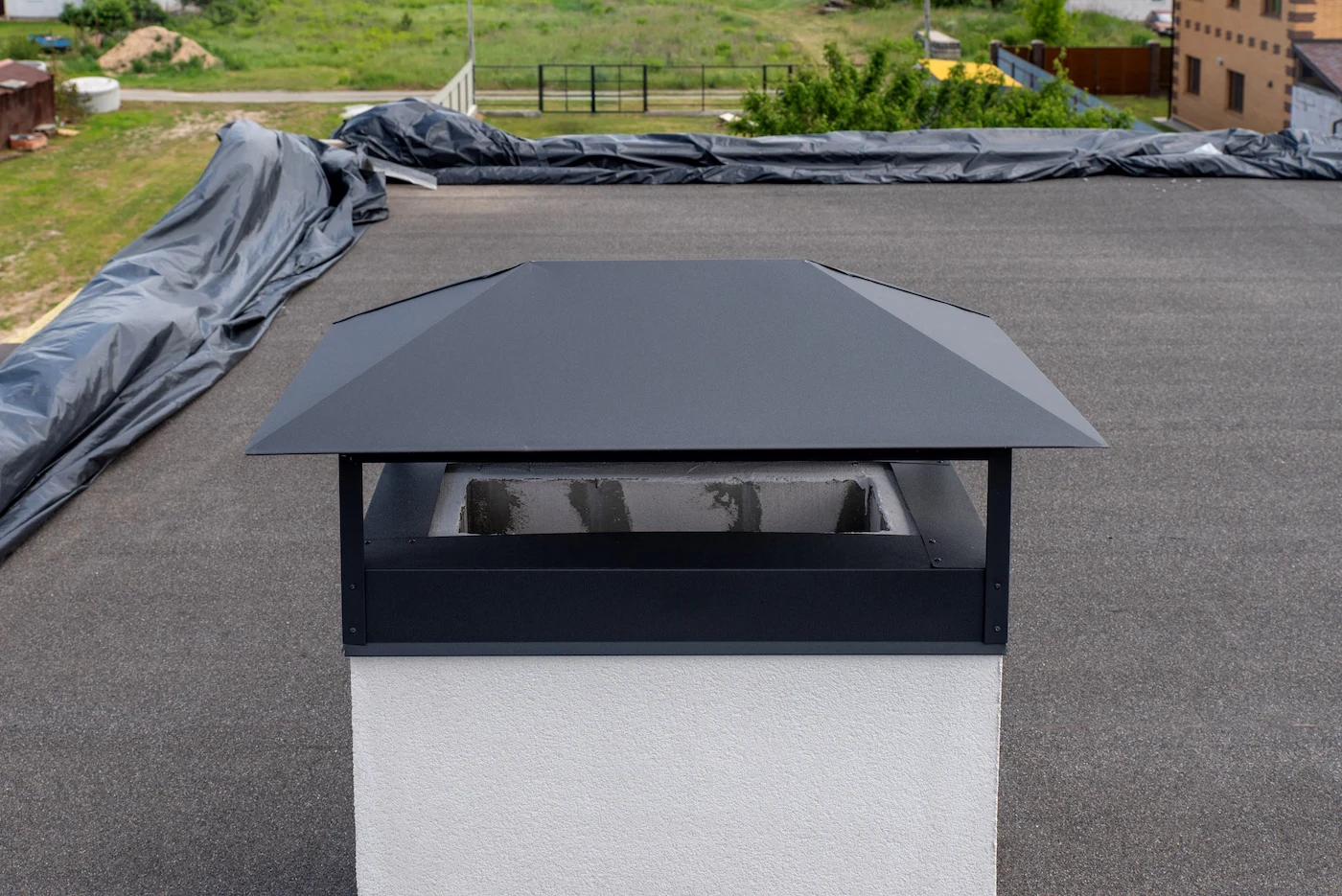
Stainless multi-flue cover fitted with spark arrestor mesh

Rain falling into an open flue lands on the smoke shelf and sits there. It soaks the damper, the smoke chamber, and the mortar joints on the inside of the chimney, where nothing dries quickly and nothing is visible from any room in the house. Rust on the damper and a persistent musty smell are usually the first symptoms anyone connects to the chimney, and by then it has been going on for years.
Wildlife is the other half of the argument. An uncapped flue near open ground is a sheltered cavity with a view, and nesting material blocks a chimney as completely as a shut damper does. Where something has already moved in, removal comes first and the cap follows the same day — never the other way around, because capping an occupied flue turns a straightforward job into a far worse one. What actually stops them coming back is worth a read.
Cap work runs from both Massachusetts offices — Wellesley covers the towns to the south, and the state page has the full area. The local list is on the Burlington page.
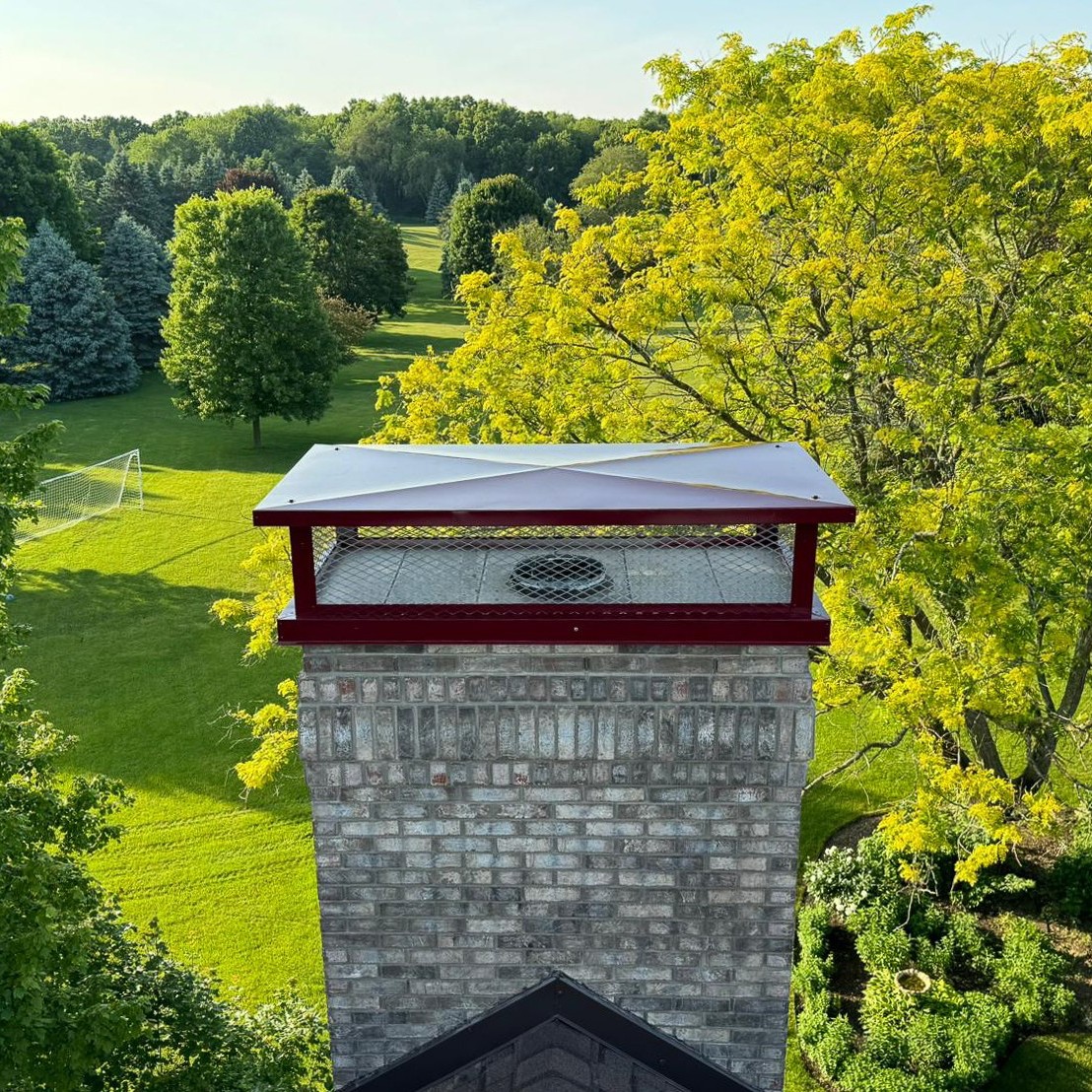

This is one of the few chimney problems you can diagnose from the driveway with a pair of binoculars, which makes it worth looking up before booking anything else.
If your chimney carries more than one flue, count the covers rather than assuming one cap does the job. Separate flues need separate protection, or a single stainless cover made to span all of them.
"
Water doesn't break chimneys overnight. It takes years — which means catching it early is everything. That's the whole repair business in one sentence.

A standard cap is a same-visit job in well under an hour. A multi-flue cover cannot be, because it has to be measured before it is fabricated — that is two visits, one to measure and one to fit, and we say so when you book rather than on the day. Access is straightforward on most local rooflines, and where it is not the technician documents it with photographs before quoting the higher rate.
01
The flue tile is measured exactly — cap fit is everything. Multi-flue chimneys are dimensioned for a custom stainless build; single flues match standard sizing.
.jpg)
02
While we're up there, the crown and top courses get checked. Anything worth watching goes in your photo report — cap and crown protect the same surface.
03
The cap is seated, anchored, and sealed so wind can't lift it. Galvanized steel for standard single flues; stainless only for multi-flue — no exceptions.
04
Wire mesh on every opening — tight enough to stop animals and embers, open enough to keep the draft unrestricted.
05
The finished installation is photographed from the roof and added to your report, with the 1-year workmanship warranty in writing.
The crown underneath. A cap sits above the crown and protects the flue, not the slab. Where the crown has cracked, that is quoted separately while the technician is already up there.
Animal removal. If the flue is occupied, extraction is its own service and has to happen first — the cap goes on the same day, but afterwards.
Chase covers on framed chimneys. Those are fabricated stainless panels covering an entire chase top rather than a flue, and they are a different job at a different price.


Every Brown Chimney cap is fitted, sealed, and checked against the crown and flashing while the technician is at the top. Structural labor carries a 1-year workmanship warranty. Call 781-547-7784 or book online.